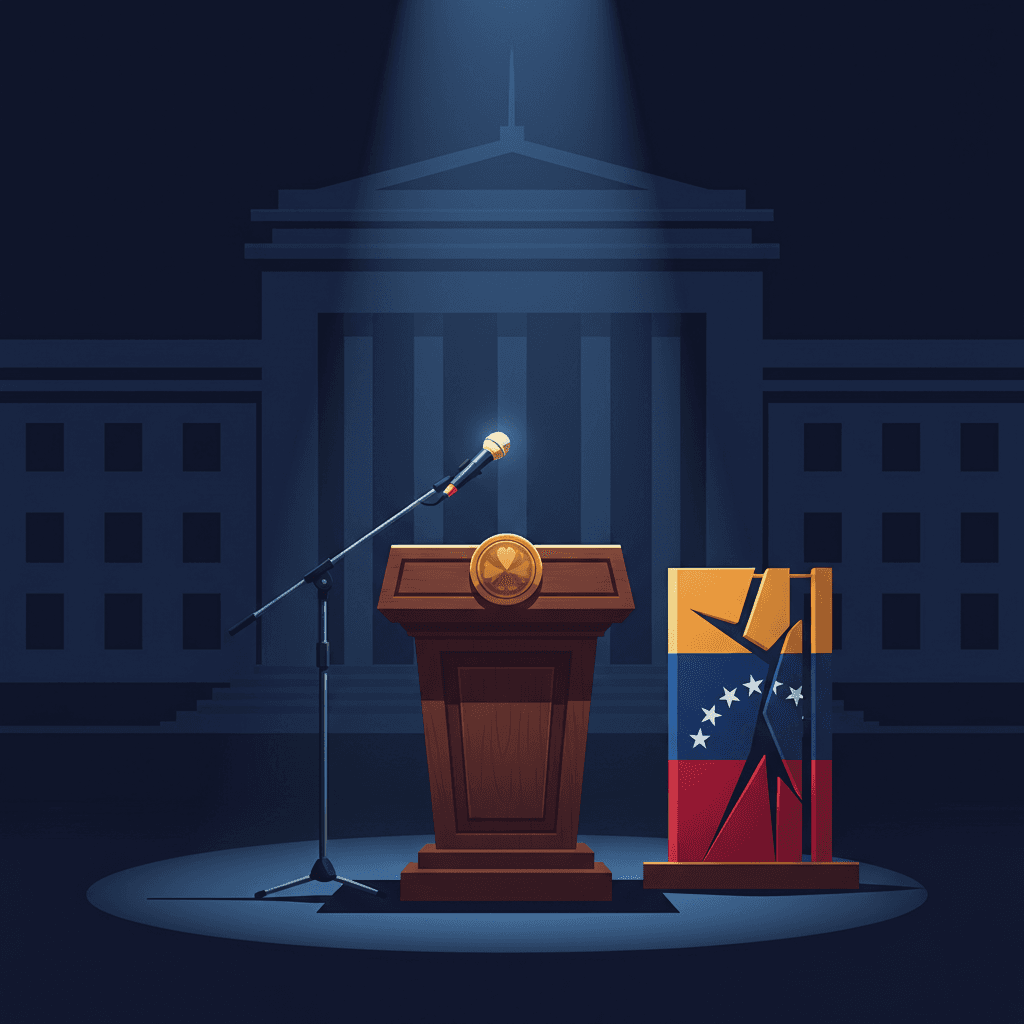
Venezuelan opposition leader María Corina Machado, the recipient of the 2025 Nobel Peace Prize, will not be able to attend the award ceremony in Oslo, Norway, on December 10, 2025. Instead, her daughter is slated to accept the prestigious honor on her behalf, highlighting the severe political climate in her home country.
Machado was awarded the Nobel Peace Prize on October 10, 2025, for her "unwavering commitment to promoting democratic rights" and her "struggle to achieve a peaceful transition from dictatorship to democracy" in Venezuela. The Norwegian Nobel Committee lauded her as a "brave and committed champion of peace" who has kept "the flame of democracy burning during a growing darkness," recognizing her as a "key, unifying figure in a political opposition that was once deeply divided" (economictimes.com).
Her conspicuous absence from the global stage is a direct consequence of a travel ban imposed by the Venezuelan government and ongoing criminal accusations against her. Machado has been living in hiding since January 2025, with her last public appearance dating back 11 months prior to the ceremony. Venezuelan Attorney General Tarek William Saab has publicly stated that Machado would be considered a "fugitive" if she attempted to travel to Norway, effectively preventing her from accepting the award in person.
This situation underscores the repressive environment faced by political opponents in Venezuela. Machado, an industrial engineer with a master's degree in finance, has been a leading voice against the administrations of Hugo Chávez and Nicolás Maduro for years. She served in the National Assembly from 2011 to 2014 and, despite winning the opposition primary by a landslide, was barred from running in the 2024 presidential election. Her struggles for human rights and democracy have also been recognized through other accolades, including the 2024 Sakharov Prize, the European Union's top human rights honor, which she shared with Edmundo González Urrutia (economictimes.com).
Machado's inability to accept her Nobel Peace Prize in person transforms her absence into a powerful symbol, drawing international attention not just to her individual struggle, but to the broader challenges confronting democracy and human rights in Venezuela.