
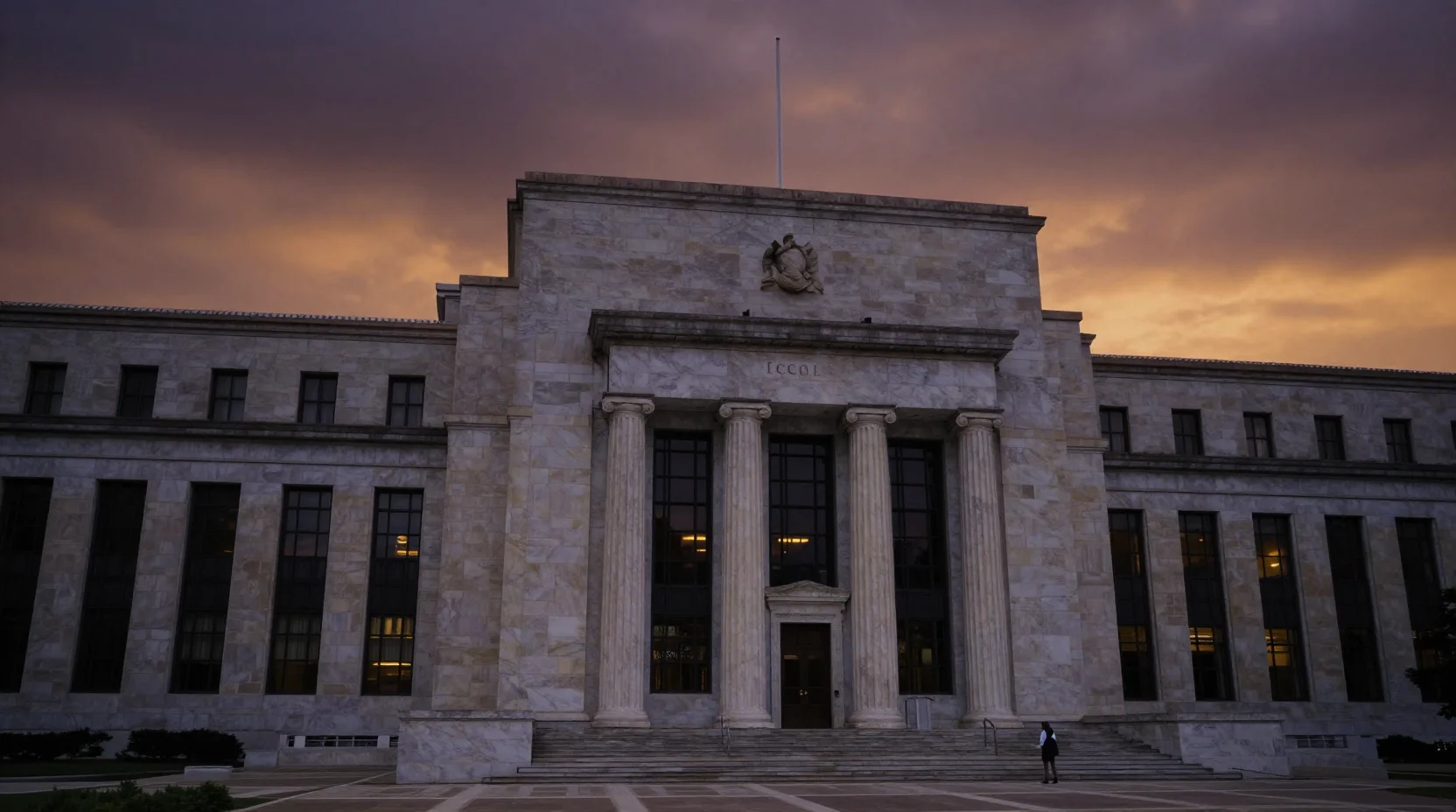
The Federal Reserve's upcoming January 2026 meeting has become a focal point for market participants, with prediction markets showing overwhelming consensus on the outcome. Current Polymarket data indicates a 0% probability of any rate change, signaling complete market confidence in the Fed's hold stance.
Current Situation
The Federal Open Market Committee (FOMC) is scheduled to conclude its January meeting on January 28, 2026, with markets universally expecting no change to the current federal funds rate target range. This expectation aligns with recent communications from Fed officials and economic data trends.
San Francisco Fed President Mary Daly recently stated that "policy in good place, calibration should be deliberate," emphasizing the need for measured adjustments rather than abrupt changes. This sentiment reflects the broader consensus within the Fed that current policy settings are appropriately restrictive to continue cooling inflation while maintaining economic stability.
Economic Context
Richmond Fed President Thomas Barkin characterized December inflation data as "encouraging", suggesting that the disinflationary process remains on track. Household net worth increased by $6.1 trillion in Q3 2025, reaching $181.6 trillion, with corporate equity holdings rising $5.5 trillion while real estate values decreased modestly by $0.3 trillion.
A Reuters poll of economists indicates expectations that the Fed will hold rates through March, with some analysts suggesting the current stance could persist through Powell's entire tenure given the strength of economic growth. The poll reflects broad agreement that the labor market remains resilient and inflation continues to moderate toward the Fed's 2% target.
Policy Considerations
The Fed faces complex political dynamics that may influence its decision-making calculus. Recent reports indicate that Fed Chair Jerome Powell has been threatened with a criminal indictment over his Senate testimony, raising concerns about potential political pressure on the central bank's independence. ECB official Rehn warned that any loss of Fed independence would "push up inflation, threaten stability," highlighting the institutional importance of maintaining autonomous monetary policy.
Despite these pressures, the Fed's dual mandate of price stability and maximum employment remains the guiding framework. December's encouraging inflation data, combined with steady growth and contained inflation expectations, provides the committee with justification for maintaining the current policy stance.
Historical Pattern
Historically, the Fed has tended to maintain policy stability during periods of moderate inflation and steady growth. The current environment, with inflation gradually declining from its peak but still above target, fits the pattern where the Fed opts for a patient approach rather than preemptive easing or tightening.
The January meeting represents the first FOMC decision of 2026 and comes just weeks before the new administration takes office. This timing typically encourages a wait-and-see approach, particularly when incoming economic data does not demand immediate policy adjustment.
Prediction
Direction: Neutral Probability: 95% Horizon: 7 days (January 28, 2026) Answer: Hold (No rate change)
CAUSE: December inflation encouraging, policy in "good place" per Daly, Reuters poll shows economists unanimous on hold through March EFFECT: 0% Polymarket probability for rate change signals complete market pricing of hold outcome PROJECTION: Overwhelming consensus across Fed officials, economists, and prediction markets indicates near-certainty of status quo decision