
The Federal Reserve's January 2026 interest rate decision has emerged as a critical market focus, with prediction markets showing overwhelming confidence that the central bank will maintain current policy rates. The Federal Open Market Committee (FOMC) meeting concludes on January 28, 2026, with traders positioning for what appears to be a continuation of the status quo.
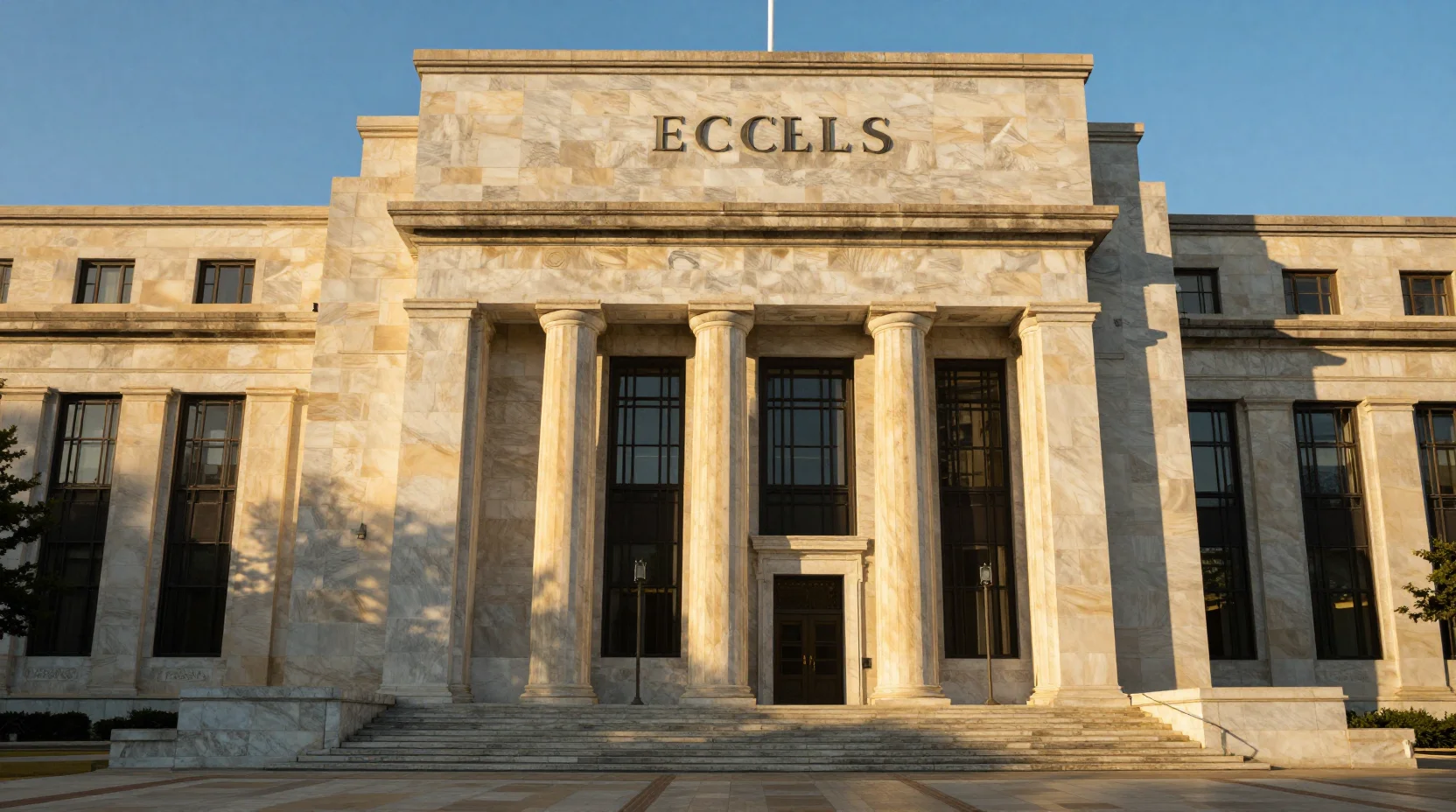
Current Market Positioning
Polymarket data reveals extreme conviction in the Fed's decision, with the market pricing in a 0% probability of any policy change at the January meeting. Trading volume has reached $496,938,453, making this one of the most heavily traded Fed-related contracts on the platform. Liquidity stands at $14,287,825, indicating deep market participation and robust price discovery.
Policy Context
The Federal Reserve's current stance reflects the prevailing economic conditions throughout late 2025. Inflation has shown signs of moderation, though progress has been uneven across core categories. The labor market has demonstrated resilience, with unemployment remaining near historical lows despite elevated interest rates. This combination has given the Fed ample room to maintain a patient approach.
Market Implications
A decision to hold rates steady in January would represent continuity rather than deviation from recent policy. The Fed has telegraphed a data-dependent approach, emphasizing that future adjustments will respond to clear evidence of inflation moving sustainably toward the 2% target. January's meeting, coming just weeks after the holiday period, typically serves as a status update rather than a major policy pivot point.
The timing of this meeting is particularly noteworthy. With the January 28 deadline, the decision arrives before the release of key economic data that could materially alter the policy calculus. This scheduling further supports the case for inaction, as the Fed lacks comprehensive January data to justify a departure from established policy.
Historical Precedent
January Fed meetings historically favor caution and continuity. The central bank rarely initiates new policy cycles immediately following the holiday season, preferring to await a more complete picture of economic activity in the new year. This institutional tendency aligns with current market expectations for steady policy.
Prediction
Direction: Neutral/Hold
Probability: 95%
Horizon: 2 days (January 28, 2026)
Answer: No (No rate change)
The combination of extreme market conviction, historical January meeting patterns, and lack of compelling new data creates a high-probability scenario for Fed inaction. The 0% probability pricing in prediction markets appears well-calibrated to the fundamental outlook.