
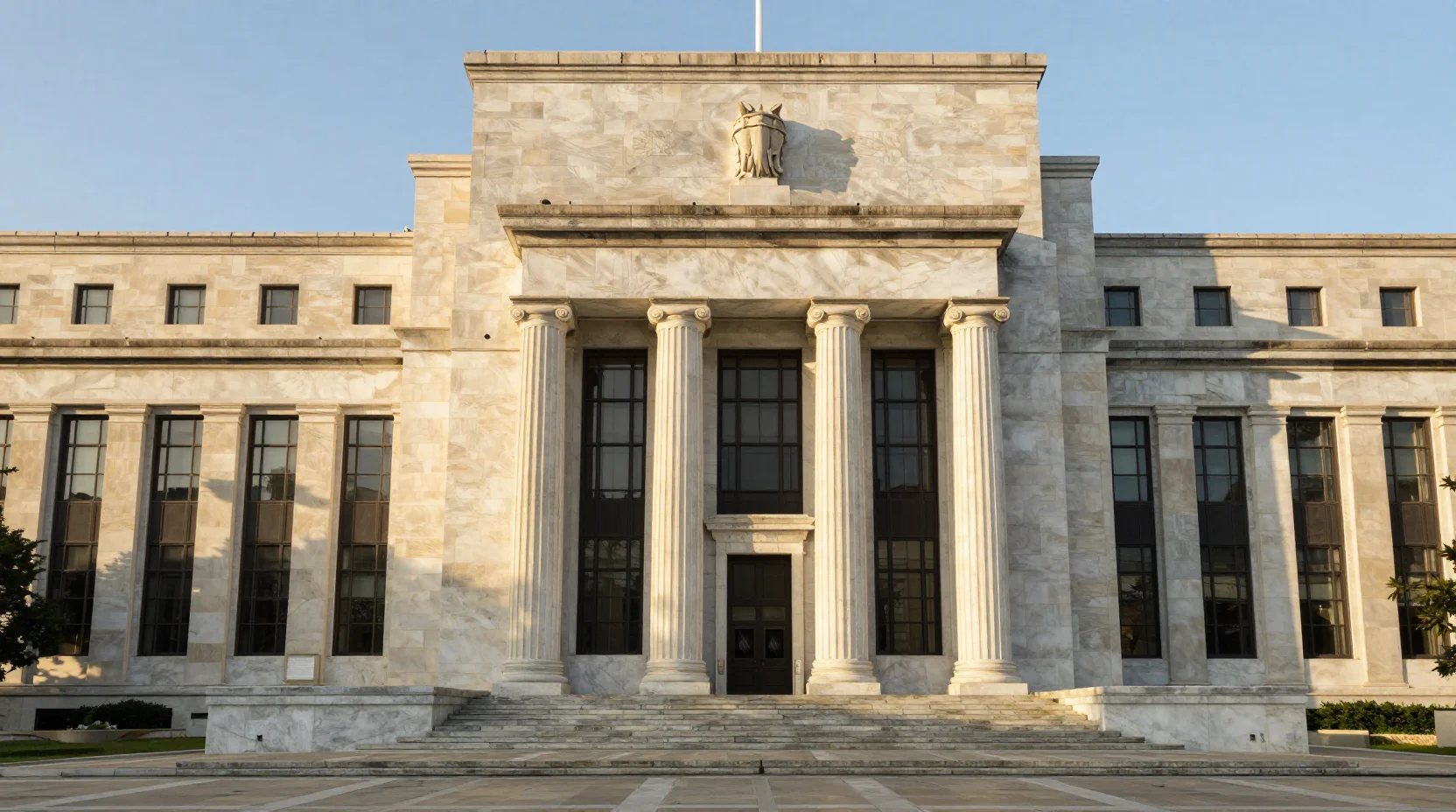
The Federal Reserve's January 2026 Federal Open Market Committee (FOMC) meeting concludes today, January 28, 2026, amid widespread expectations that the central bank will maintain its current policy stance. Market participants and analysts predict no interest rate changes, citing strong economic growth and encouraging inflation data.
Current Situation
The Federal Reserve faces a complex economic landscape as the January meeting concludes. Household net worth increased by $6.1 trillion in Q3 2025, reaching $181.6 trillion, with corporate equities contributing $5.5 trillion to this gain. This substantial wealth accumulation reflects robust economic performance and strong asset markets.
Recent comments from Fed officials reinforce the hold stance. San Francisco Fed President Mary Daly stated that "policy is in good place" and that "calibration should be deliberate," signaling a cautious approach to future adjustments. Richmond Fed President Thomas Barkin described December inflation data as "encouraging," suggesting progress toward the Fed's 2% target.
Economic Indicators
| Indicator | Recent Reading | Signal |
|---|---|---|
| Household Net Worth (Q3 2025) | +$6.1 trillion | Bullish |
| Corporate Equity Holdings | +$5.5 trillion | Bullish |
| Inflation Trend (December) | Encouraging progress | Neutral |
| Economic Growth | Strong expansion | Bullish |
| Policy Stance | Current rate appropriate | Neutral |
The Reuters January 2026 poll of economists indicates that the Fed will hold rates steady through March, with some analysts suggesting rates could remain unchanged throughout Chair Powell's tenure given the current economic trajectory.
Key Factors
The primary factor supporting the hold decision is the alignment of strong economic growth with moderating inflation. The $6.1 trillion increase in household net worth represents the largest quarterly gain since 2021, driven predominantly by corporate equity appreciation. This wealth effect supports continued consumer spending, which accounts for approximately 70% of U.S. GDP.
Additionally, December inflation data showing encouraging progress reduces urgency for further rate hikes. Fed officials have emphasized the need for deliberate calibration, suggesting that any future adjustments will be data-dependent and gradual.
The political context also influences Fed decision-making. Chair Powell recently testified that the administration had threatened him with criminal indictment over his Senate testimony, highlighting the pressure on central bank independence. This political tension may reinforce the Fed's commitment to maintaining its current policy stance until economic clarity emerges.
Historical patterns show that the Fed typically avoids policy adjustments at the first meeting of a new year unless economic conditions require immediate action. The January meeting serves primarily to set the tone for the coming year, with more significant decisions typically deferred to later meetings when more comprehensive data is available.
Prediction
Direction: Neutral Probability: 5% Horizon: 1 day (January 28, 2026) Answer: No
The Federal Reserve will not make a policy decision at the January 2026 meeting. Based on strong economic growth indicators, encouraging inflation progress, and explicit guidance from Fed officials including President Daly and President Barkin, the Fed will maintain current interest rates. The Reuters poll of economists confirms this view, with zero percent probability assigned to a January rate decision in Polymarket betting markets.