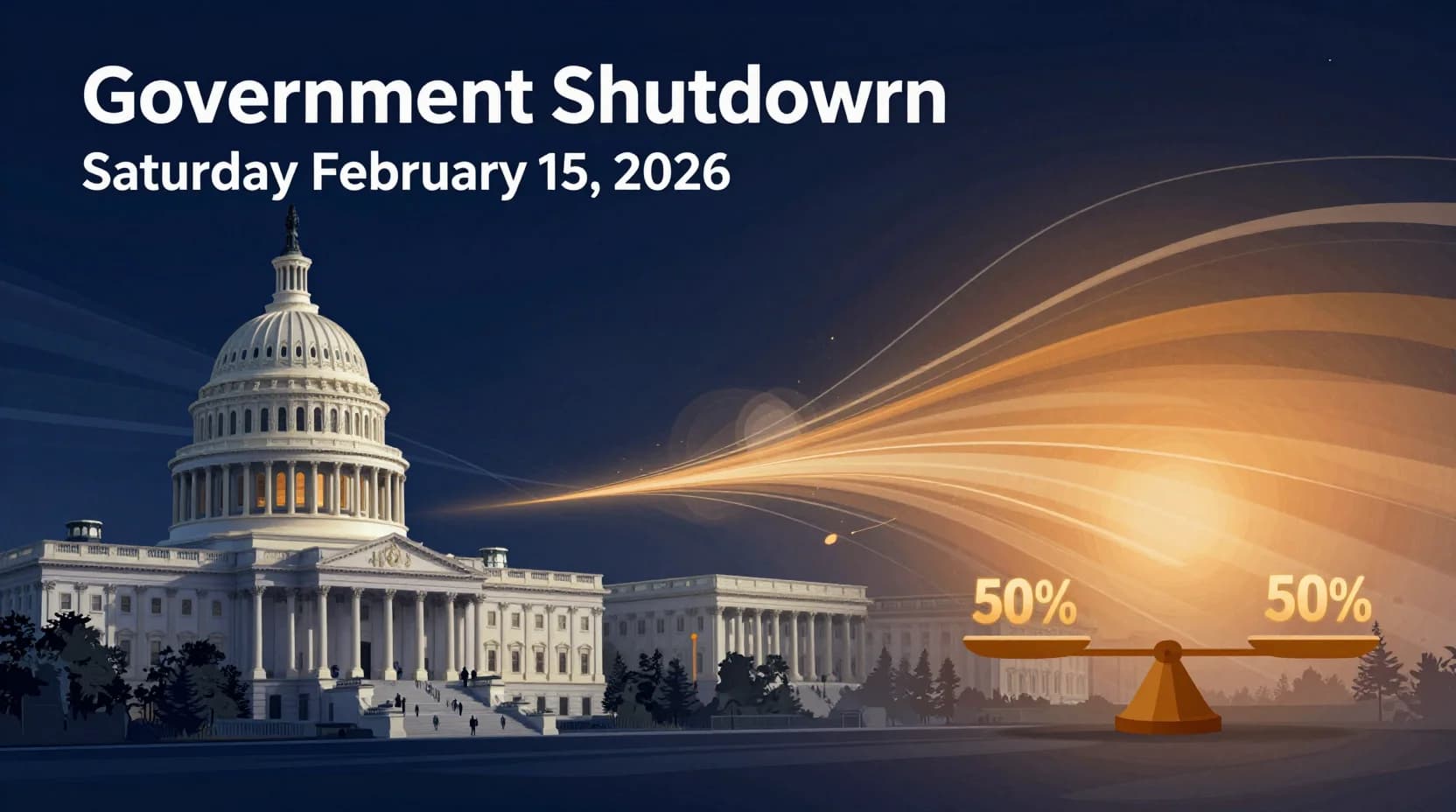
Congress is playing chicken with the Department of Homeland Security's budget, and the deadline is Friday. Prediction markets give a shutdown just a 32% chance of happening -- but with $6.98 million in trading volume, plenty of sharp money is hedging its bets.
- Polymarket traders assign a 68% probability that Congress averts a DHS shutdown before the February 14 deadline
- This would be a partial shutdown affecting border security, TSA, and federal law enforcement -- not a full government closure
- Negotiations have stalled over presidential immigration enforcement powers, but last-minute deals are Washington's specialty
Here's what the numbers actually say about whether your TSA line is about to get a lot longer.
DHS Funding Crisis: Current Situation
The Department of Homeland Security's funding runs dry on February 14, 2026. That's not a metaphor -- it's a literal expiration date. While most federal agencies secured funding through September 30, the DHS got left holding the empty plate at the budget table.
The sticking point? Proposals to limit presidential authority on immigration enforcement. If that sounds like a political grenade, that's because it is. Both sides have dug in, and according to North Carolina Public Radio, "with just days left until funding deadline, lawmakers seem no closer to making a deal."
Partial vs Full Shutdown: What's at Stake
Before you start stockpiling canned goods, consider what a "shutdown" actually means here. This isn't 2018-style, parks-closed, monuments-barricaded drama. It's a partial shutdown targeting one department:
| Affected Area | Impact |
|---|---|
| Border Security | Reduced staffing, continued operations |
| TSA | Airport delays possible |
| Federal Law Enforcement | Essential staff remain on duty |
| Other DHS Functions | Administrative slowdowns |
Most DHS workers would stay on the job -- they just wouldn't get paid on time. If you're traveling, your biggest concern would be longer airport lines, not a Mad Max scenario.
Negotiation Status: Stalled Talks
As of February 11, congressional talks sit dead in the water. Multiple reports confirm that lawmakers remain at odds over homeland security reform as the clock ticks down.
But here's the thing you should remember about Washington: brinkmanship is the default operating mode, not the exception. Congress has a remarkable talent for manufacturing crises, letting the tension build to maximum theatrics, and then passing a last-minute continuing resolution while patting themselves on the back. It's happened so many times that prediction markets essentially price it in as the base case.
That's exactly what the 68% "No Shutdown" probability reflects -- not optimism about bipartisanship, but cynicism about Congress's pattern of kicking the can just far enough to avoid consequences.
Resolution Criteria and Timeline
The Polymarket market resolves based on an official announcement from the U.S. Office of Personnel Management (OPM). Specifically:
| Criteria | Detail |
|---|---|
| Resolution trigger | OPM announces new federal shutdown |
| Deadline | February 14, 2026, 11:59 PM ET |
| Partial shutdowns | Count as shutdowns |
| Previous shutdown continuation | Does NOT qualify (Jan 31, 2026 shutdown) |
| Weather/holiday closures | Do NOT qualify |
| Source | OPM Operating Status |
FAQ
Will the government shutdown on Saturday February 15, 2026?
Prediction markets assign a 32% probability to a shutdown by February 14. Traders are skeptical Congress will let DHS funding lapse, despite negotiations being stalled as of February 11. Historical patterns strongly favor last-minute deals.
Is this a full government shutdown or partial?
Partial. Only the Department of Homeland Security is at risk -- most other federal agencies have funding through September 30, 2026. You'd notice longer airport lines, not a full government freeze.
What happens if DHS shuts down?
Most DHS workers remain on duty since their roles are deemed essential. Travelers could face TSA delays, and some administrative functions would slow down. Border security operations continue but potentially with reduced staffing.
Why is Congress at an impasse?
The core fight is over limiting presidential powers on immigration enforcement. It's the kind of politically radioactive issue where neither side wants to blink first -- which is exactly why deadlines exist, to force someone's hand.
Prediction
Direction: No Shutdown | Probability: 68% | Horizon: 1 day (by February 14, 2026, 11:59 PM ET) Answer: No
Washington runs on deadline pressure the way cars run on gasoline. The 68% no-shutdown probability reflects a well-established pattern: Congress manufactures drama, markets price in the noise, and a last-minute deal materializes just before actual consequences hit. The political cost of a DHS shutdown heading into a weekend is high enough that both sides have every incentive to find an exit ramp.
How to Trade This Prediction
This DHS funding outcome is actively traded on Polymarket. If you have conviction about whether Congress will pull off its usual last-minute save -- or fumble the ball this time -- you can back your view with real stakes.
Trading Options:
- If you believe a shutdown will occur: Buy "Yes" shares at 32 cents (potential +213% if correct)
- If you believe no shutdown will occur: Buy "No" shares at 68 cents (potential +47% if correct)
| Outcome | Share Price | Implied Probability | Potential Return |
|---|---|---|---|
| Yes (Shutdown) | 32 cents | 32% | +213% |
| No (No Shutdown) | 68 cents | 68% | +47% |
Shares pay $1 if your outcome is correct, $0 if wrong. The market resolves based on the official OPM announcement by February 14, 2026, at 11:59 PM ET.
Risk Warning: Prediction markets involve financial risk. Only trade what you can afford to lose. Past prediction accuracy does not guarantee future results. This is not financial advice.