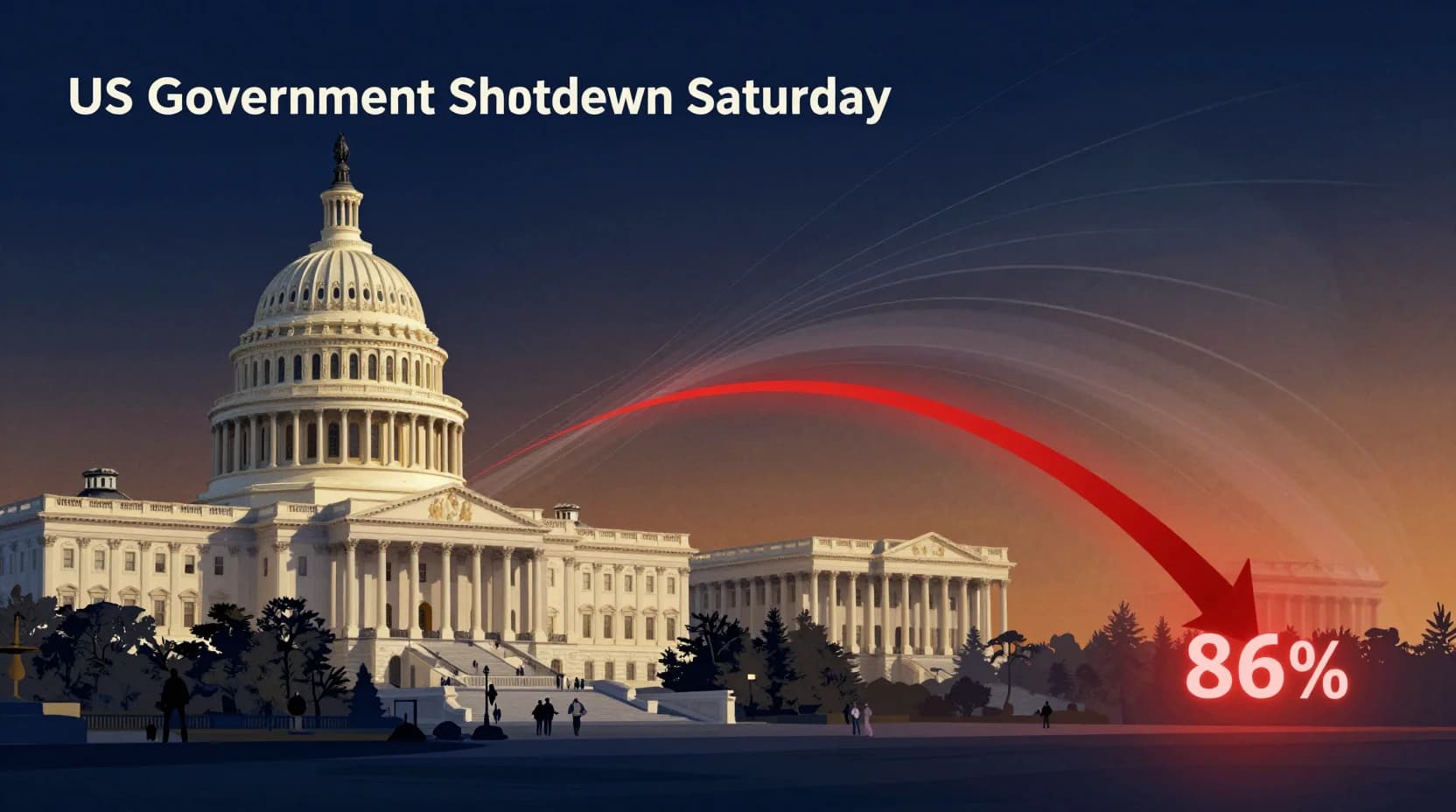
Polymarket says there's an 86% chance the federal government shuts down by Saturday. That's not a drill—that's Wall Street betting real money that Congress can't get its act together before the January 31, 2026 deadline.
What's Actually Happening
Here's the situation: Congress needs to pass a funding bill by midnight Friday or the government runs out of money. Seems simple, right? But in Washington, nothing is ever simple.
The White House has been busy touting economic wins—low inflation, rising wages, their plan for a "boom in 2026." What they haven't been doing? Leading the charge on shutdown prevention. The administration's focus on tariffs, tax cuts, and deregulation has left some wondering if avoiding a shutdown is even a priority.
How We Got Here
The federal government runs on appropriations bills passed by Congress. When those bills expire and new ones aren't ready, agencies have to shut down non-essential operations. National parks close. Passport applications stall. Hundreds of thousands of federal workers get sent home without pay.
We've been here before. The 2018-2019 shutdown lasted 35 agonizing days over border wall funding. That was a Democratic House versus a Republican president. Now Republicans control everything—and they still might not get a deal done.
Why This Shutdown Feels Different
You'd think unified Republican control would make this easy. But here's the thing: when one party runs the whole show, the fights happen inside the tent. Different factions want different things. Some want deeper spending cuts. Others want policy riders attached to the bill. And with no Democratic boogeyman to blame, any shutdown lands squarely on Republican shoulders.
The administration's economic messaging makes this even stranger. If you're bragging about a coming economic boom, do you really want to trigger a shutdown that could spook markets and derail consumer confidence?
What Happens Next
If Congress passes a continuing resolution—even a short-term one—government stays open. If they don't, non-essential operations pause Saturday morning. Essential services like air traffic control and border security continue, but plenty of everyday Americans feel the pinch.
Prediction
Direction: Bearish for government operations Probability: 86% Horizon: 1 day (January 31, 2026) Answer: Yes
The 86% Polymarket probability tells you everything you need to know. Congress has hours, not days. The administration seems focused elsewhere. And intra-party disagreements are apparently harder to resolve than bipartisan ones. Barring a last-minute miracle, expect a shutdown to begin Saturday.