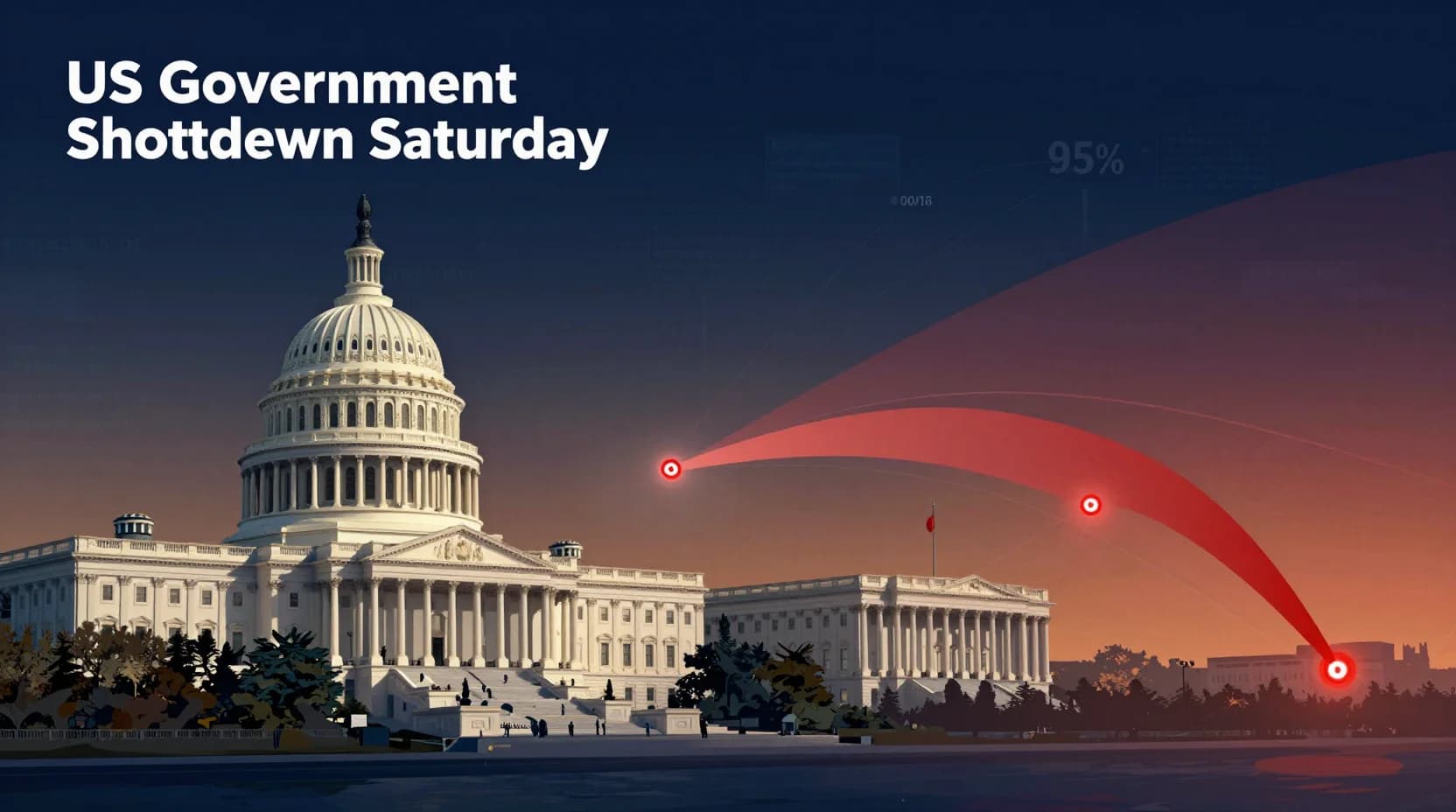
Here's a number that should scare every federal employee: 95%.
That's the probability prediction markets are assigning to a U.S. government shutdown this Saturday, January 31, 2026.
This isn't political theater anymore. It's practically a done deal.
The Deadline Clock
Saturday. That's when the money runs out.
Congress is technically still working on the appropriations bills—H.R. 7148 (Consolidated Appropriations Act, 2026) and H.R. 7147. But let's be honest: the clock is ticking, and there's no sign of a deal.
When funding deadlines fall on weekends, government operations typically limp through. The actual shutdown hits Monday morning. That buys a few extra hours for last-minute negotiations. But it doesn't solve the fundamental problem: Congress hasn't done its job.
What Actually Happens
Let's cut through the noise. A government shutdown means:
Essential services continue. Social Security checks still go out. Medicare still works. Air traffic controllers still show up. Border patrol and law enforcement stay on the job.
Everything else stops. National parks close. Museums lock their doors. Passport applications pile up. Federal contractors stop getting paid.
People work for free. Essential employees keep working, but they don't get paid until Congress fixes the mess. Try telling your landlord you'll pay rent "when Congress passes a budget."
The economic damage scales with time. A two-day shutdown is an inconvenience. A two-week shutdown costs billions.
The Exit Ramps
Congress has options. They just haven't used them:
Continuing Resolution (CR): Kick the can down the road. Fund everything at current levels for a few weeks or months. This is the most common escape hatch.
Omnibus Bill: One massive bill that funds everything through September. Clean, efficient, and apparently impossible in today's political climate.
Individual Bills: Pass all 12 appropriations bills separately. Cute idea. Hasn't worked in years.
Full-Year CR: Just extend current funding through September 30 and call it a day. Not ideal, but better than nothing.
What the Markets Are Saying
The Polymarket line on "How long will the Government Shutdown last?" sits at 97% probability.
Translation: markets aren't just expecting a shutdown. They're expecting one that lasts longer than a weekend.
Prediction markets aren't crystal balls. They can be wrong. But when the odds hit 95%+, the burden of proof shifts to anyone predicting otherwise.
Prediction
Direction: Bearish for government operations Probability: 95% Horizon: 1 day (January 31 - February 1, 2026) Answer: Yes
The math here is brutal. Congress has hours, not days. No deal is imminent. No breakthrough is visible. The 95% market probability reflects reality: unless something dramatic happens in the next few hours, federal workers should prepare for furlough notices.
The good news? Most shutdowns end eventually. The bad news? "Eventually" doesn't pay the rent.