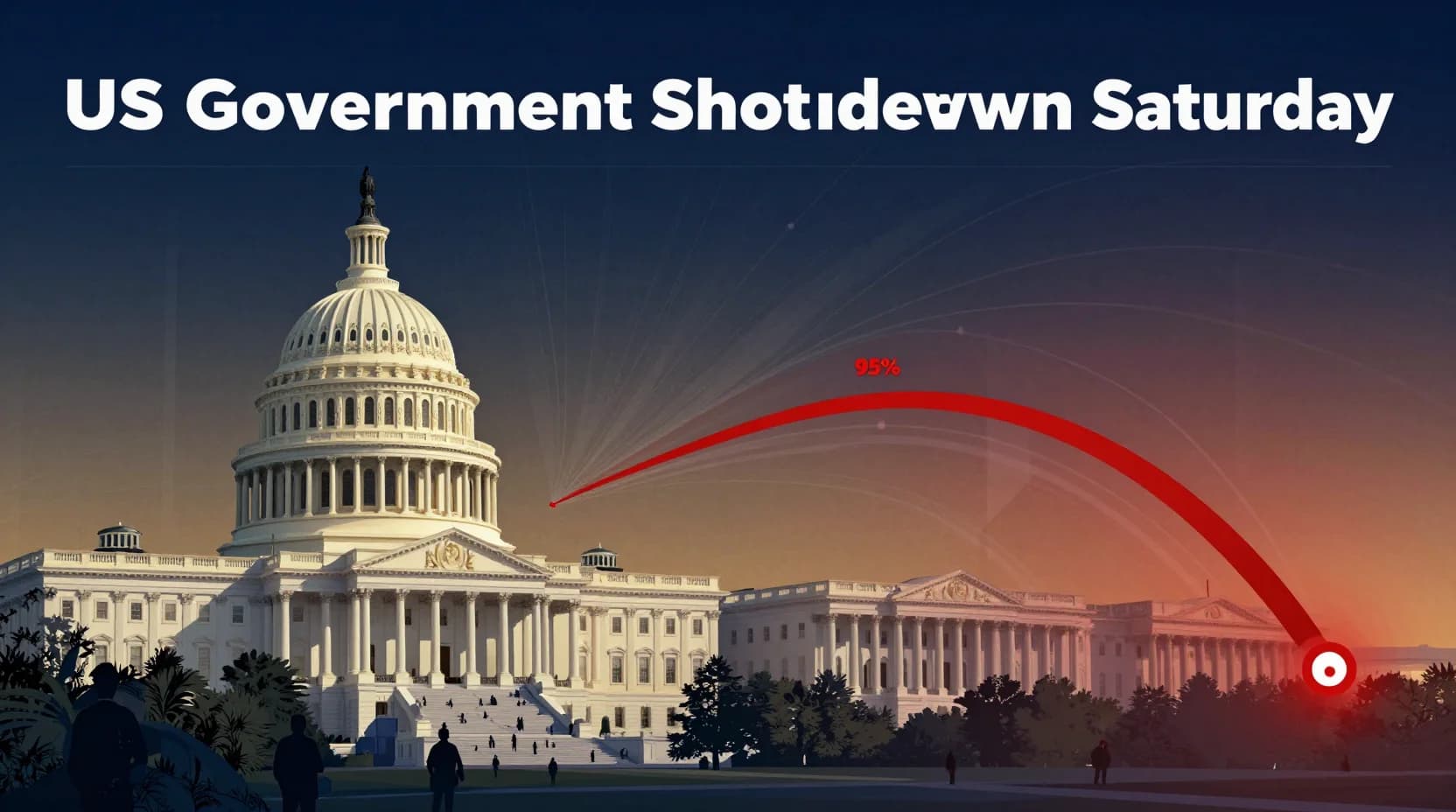
Tick tock. Congress has until midnight on January 31, 2026, to pass a funding bill—or the federal government shuts down. The prediction markets are already pricing in a shutdown at 95% probability. Here's why they're probably right.
The Clock Is Running Out
Let's cut through the Washington jargon. Here's where things stand:
The federal government's money runs dry at midnight on January 31. Congress introduced H.R. 7148 (the Consolidated Appropriations Act for 2026) on January 27—giving themselves just four days to pass a massive spending bill through both chambers and get it signed by the President.
That's not a lot of time for a body that's famous for moving slowly.
What Happens If They Miss the Deadline?
A government shutdown isn't the end of the world, but it's messy. Here's the breakdown:
Essential services keep running—air traffic control, border security, law enforcement. Your flight won't get canceled, and 911 will still work.
But huge chunks of the federal workforce get sent home without pay. National parks close. Permit applications stall. Government contractors stop getting paid. It's disruptive, expensive, and completely avoidable.
The 2018-2019 shutdown lasted 35 days and cost the economy an estimated $11 billion. Not exactly small change.
Why Markets Expect a Shutdown
The Polymarket odds tell a stark story: 95% probability that a shutdown happens. That's not skepticism about Congress—that's near-certainty.
Here's the problem: Even if Democrats and Republicans agree on the broad strokes of a spending bill, the logistics are brutal. The bill needs to pass the House, pass the Senate, and get presidential approval—all before the clock strikes midnight.
When was the last time Congress did anything that quickly?
The Most Likely Outcome
History offers a clue. Washington loves a dramatic deadline, followed by a last-minute deal that fixes everything... temporarily. The 95% market odds suggest we're heading for at least a brief funding lapse—even if it's just a few hours or days while paperwork gets sorted.
The prediction here? A shutdown happens, but it probably won't last long. Congress has a habit of finding solutions right after problems become unavoidable.
Prediction
Direction: Bearish Probability: 95% Horizon: 1 day (January 31, 2026) Answer: Yes
The math is simple: Congress introduced funding legislation four days before the deadline. That's cutting it close even for a body that thrives on cliff-edge negotiations. The 95% market probability isn't pessimism—it's realism. Expect a shutdown to begin Saturday, February 1, with the real question being how long it lasts, not whether it happens at all.