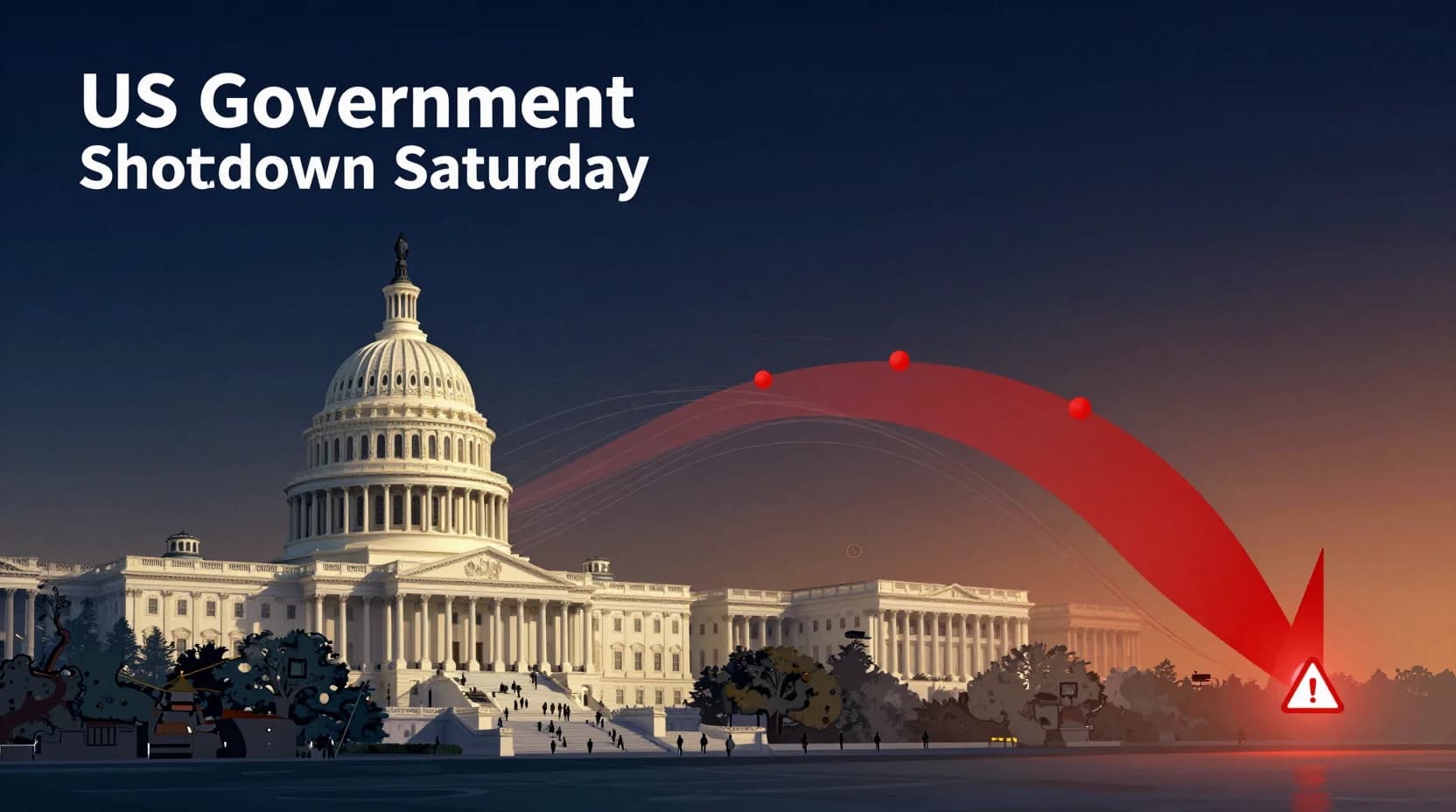
Congress has 48 hours. Tick tock.
The federal government runs out of money on Saturday, January 31, 2026 -- and prediction markets give a 73% chance that lawmakers will let the clock run out. That's not optimism. That's traders betting on dysfunction.
The Mess We're In
Here's the situation in plain English: The government is running on a temporary funding patch called a continuing resolution. That patch expires Saturday. Without a new one, the lights go out.
Hundreds of thousands of federal workers would stop getting paychecks. National parks would close. Passport applications would freeze. The only things that keep running are the essentials -- military, air traffic control, Social Security payments.
Sound familiar? It should. We've done this dance before.
Why 73% of Traders Say "It's Happening"
Polymarket shows $21 million has been wagered on this outcome. That's real money from people who follow Washington closely. And they're not optimistic.
The math is brutal:
| Factor | Reality Check |
|---|---|
| Time remaining | ~48 hours |
| Deal on the table | None |
| Negotiations | Stalled |
| History | Shutdowns are becoming routine |
When markets price something at 73%, they're not guessing. They're looking at the same facts everyone else sees and reaching the logical conclusion: Congress can't get its act together.
The Shutdown Playbook
If you've never lived through a government shutdown, here's what happens:
Day 1: Federal employees get told not to come to work. Essential staff keep working without pay. Non-essential staff get furloughed.
Days 2-7: The public notices. National parks close. Tax refunds get delayed. Small business loans freeze. Congress points fingers.
Week 2+: Pressure builds. Federal workers miss paychecks. The economic damage compounds. Eventually, someone blinks.
The longest shutdown in history lasted 35 days in 2018-2019. Nobody wants to repeat that. But nobody's rushing to cut a deal either.
What's Different This Time
The Trump administration has been busy. Tariffs. Tax cuts. Deregulation. But here's the catch -- none of that matters if there's no money to run the government.
The budget process is separate from all those executive actions. It requires Congress to actually pass something. And Congress, as usual, is fighting over the details.
Saturday's deadline adds another wrinkle. Weekend shutdowns feel different than weekday ones. Agencies have more time to prepare, but the public pays less attention. It's a weird dynamic.
The 27% Hope
Markets aren't always right. That 27% probability of avoiding a shutdown represents the possibility of a last-minute deal.
It's happened before. Congress has a habit of staring into the abyss, then pulling back at the last second. A continuing resolution could pass Friday night. A weekend agreement could keep things running.
But betting on congressional competence has been a losing strategy lately.
Prediction
Direction: Bearish | Probability: 73% | Horizon: 2 days (January 31, 2026) Answer: Yes, shutdown likely
The evidence points one direction. A 73% probability backed by $21 million in trading volume. No deal currently on the table. Less than 48 hours on the clock. A history of budget brinkmanship.
Could Congress surprise us? Sure. But the smart money says federal workers should prepare for furlough notices.
If you're dependent on federal services -- passport applications, small business loans, national park visits -- plan accordingly. The government might be taking an unscheduled vacation.