
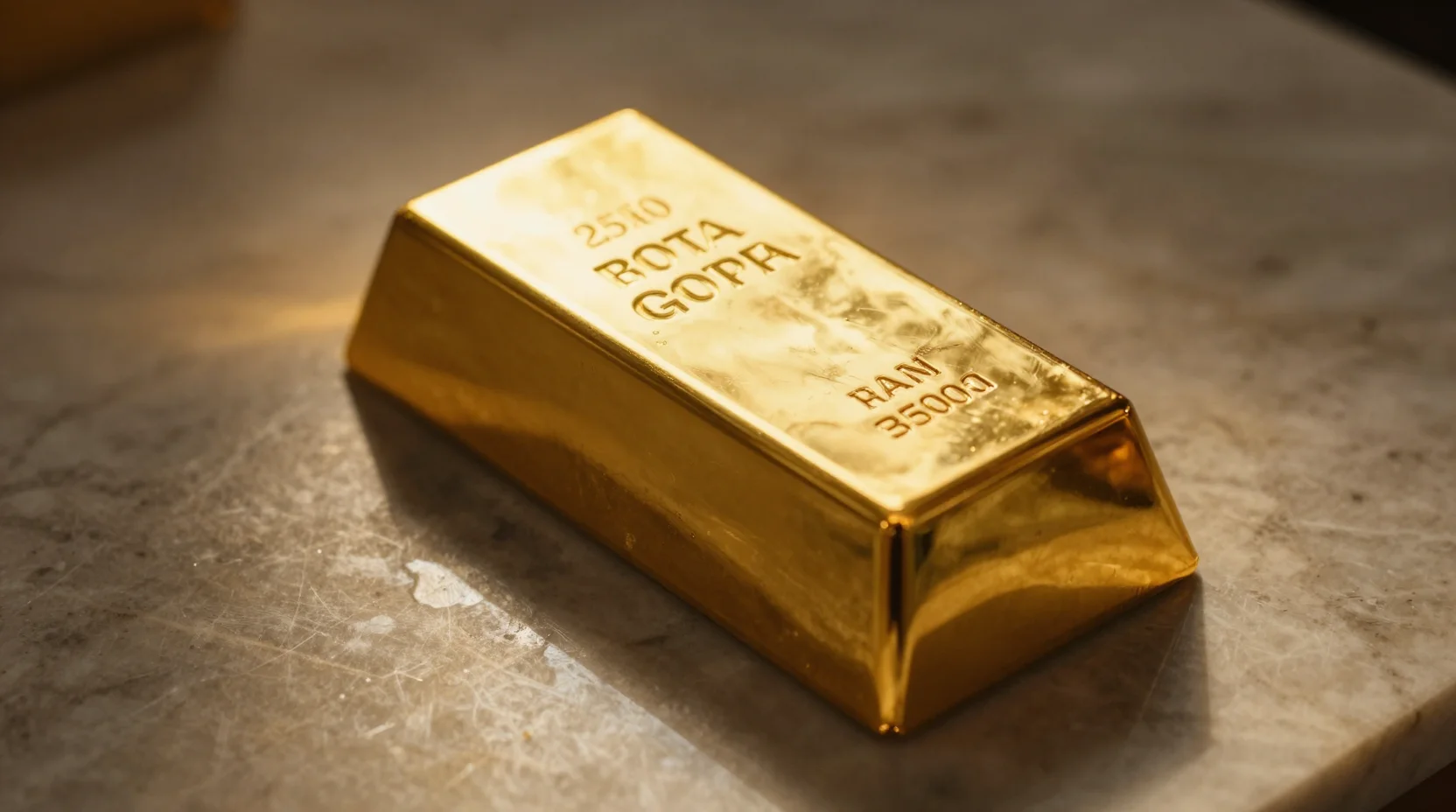
Gold and silver futures surged to record highs in early January 2026, driven by geopolitical tensions and Federal Reserve policy uncertainty. The commodities supercycle appears "firmly intact" according to market analysts, as investors flock to safe-haven assets amid growing global instability.
Current Situation
Gold futures (GC) have been trading at elevated levels following a tumultuous start to 2026. The precious metal has benefited from renewed uncertainty around Trump administration policies, Federal Reserve interest rate decisions, and escalating international tensions involving Iran, Venezuela, and Greenland. Silver has also participated in the rally, reaching fresh record highs alongside gold.
The surge reflects investor anxiety about multiple risk factors, including potential trade policy shifts, monetary policy direction, and geopolitical flashpoints. Commodities markets are signaling that risk appetite remains subdued as portfolio managers seek protection in traditional stores of value.
Market Context and Technical Factors
| Factor | Current Status | Impact |
|---|---|---|
| Geopolitical Tensions | Elevated (Iran, Venezuela, Greenland) | Bullish |
| Fed Policy Uncertainty | High (January meeting pending) | Bullish |
| Dollar Strength | Mixed | Neutral |
| Inflation Expectations | Rising | Bullish |
| Investor Sentiment | Risk-off mode | Bullish |
The confluence of these factors has created a supportive environment for precious metals. Gold's historical role as a hedge against both geopolitical uncertainty and monetary policy volatility has been on full display. With the Federal Reserve's January 2026 meeting approaching, market participants are positioning for potential rate trajectory shifts that could impact dollar-denominated assets.
Key Drivers Behind the Rally
Several structural factors underpin the current gold strength. First, persistent geopolitical tensions across multiple regions have renewed demand for safe-haven assets. The situations involving Iran, Venezuela, and territorial disputes involving Greenland represent genuine sources of international uncertainty that typically support gold prices.
Second, Federal Reserve policy remains in flux. With the January 2026 FOMC meeting on the horizon, questions about rate cuts, holds, or potential hikes continue to hover over markets. This uncertainty typically benefits gold as a non-yielding alternative to interest-bearing assets when the rate path is unclear.
Third, the broader commodities complex has been showing strength, suggesting a potential supercycle environment. When multiple commodities rally simultaneously, it often signals sustained investor interest in the asset class rather than a temporary rotation.
Probability Analysis for $3,000 Target
Reaching $3,000 per ounce by January 31, 2026, would require an approximately 50% gain from current record levels (assuming gold is trading around $2,000-$2,100). While the bullish momentum is undeniable, this magnitude of increase within a two-week window represents an extremely high bar historically.
Gold's typical volatility allows for moves of 5-10% within a month under extreme conditions. A 50% surge would be unprecedented without a catastrophic geopolitical event or systemic financial crisis. Neither scenario appears to be the current baseline case, despite the elevated tensions.
The more probable path involves continued strength and potentially new records, but the $3,000 level appears to be stretched for the January 2026 timeframe. Market participants expecting this outcome would need to see a significant escalation in either geopolitical risks or a dramatic shift in Federal Reserve expectations.
Prediction
Direction: Bearish
Probability: 15%
Horizon: 5 days (January 31, 2026)
Answer: No
The probability of gold futures reaching $3,000 by end of January 2026 is low. While the bullish setup is undeniable with record highs already established and multiple supportive factors in play, the magnitude of the required move (approximately 50% in two weeks) makes this outcome highly unlikely. Gold typically does not experience such extreme short-term gains without systemic crisis conditions, which are not currently present. The more probable scenario is that gold consolidates around current record levels or makes modest new highs, but falls short of the psychologically significant $3,000 mark within the January timeframe.