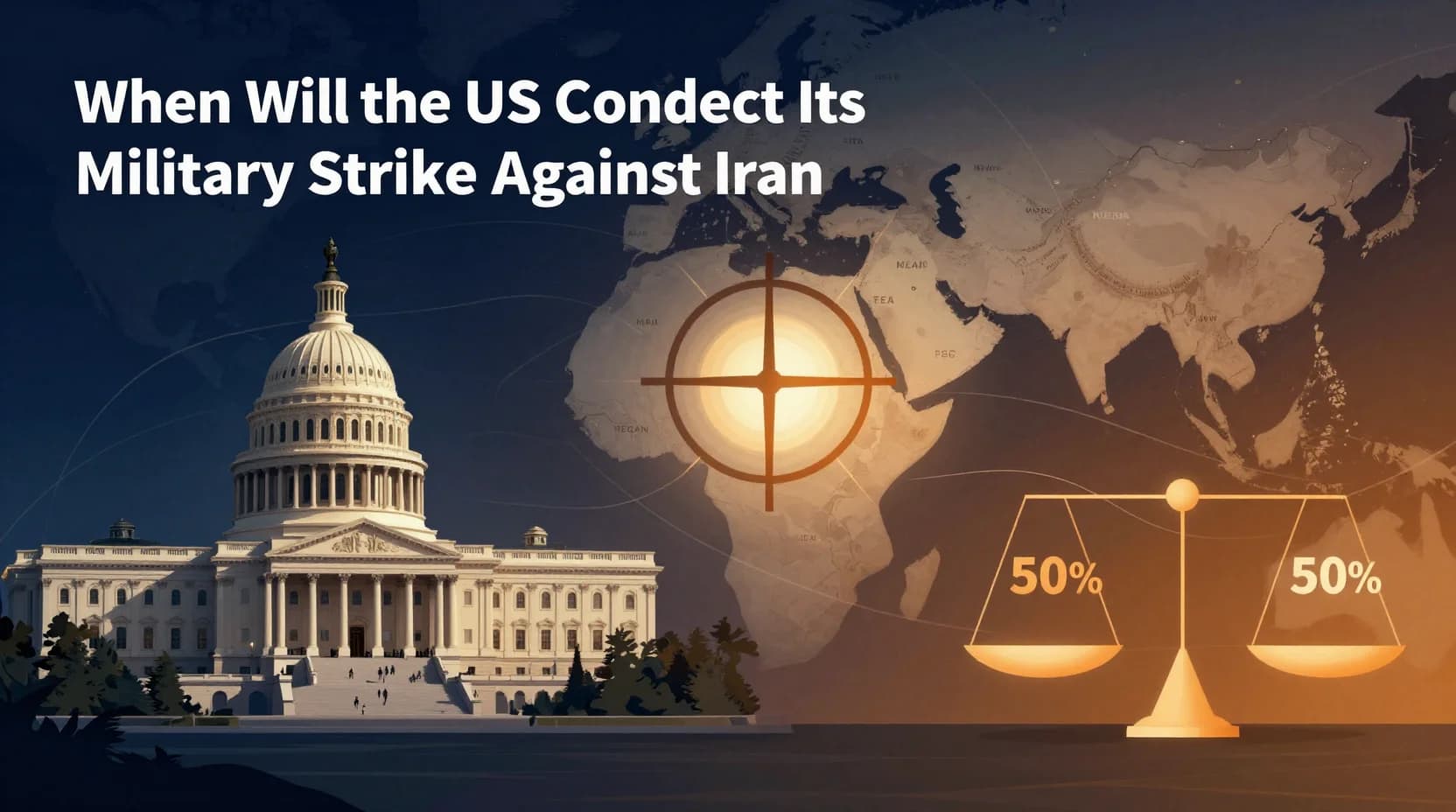
Tensions between the United States and Iran remain elevated as the January 31, 2026 deadline approaches for the resolution of a prominent Polymarket prediction market. With $24.1 million in trading volume and a 50% probability indicating uncertainty among traders, the question of whether the US will conduct military strikes against Iran this week has become a focal point for geopolitical analysts.
- 1 million in trading volume and a 50% probability indicating uncertainty among traders, the question of whether the US will conduct military strikes against Iran this week has become a focal point for geopolitical analysts
- " with a June 30, 2026 deadline shows only a 10% probability with $116
- The divergent probabilities between near-term (50% by January 31) and longer-term (10% by June 30) markets reveal an interesting pattern: traders believe either military action happens imminently, or not at all within the first half of 2026
Current Situation
The prediction market "US next strikes Iran on...?" expires on January 31, 2026, reflecting immediate-term concerns about potential military action. This short timeframe suggests traders are assessing the likelihood of a rapid escalation in US-Iran tensions. The market structure indicates traders are speculating on specific timing rather than the broader question of whether strikes will occur eventually.
Separately, another Polymarket market asking "US strikes Iran by...?" with a June 30, 2026 deadline shows only a 10% probability with $116.3 million in trading volume, suggesting traders view near-term action as more likely than long-term certainty.
Market Context
The divergent probabilities between near-term (50% by January 31) and longer-term (10% by June 30) markets reveal an interesting pattern: traders believe either military action happens imminently, or not at all within the first half of 2026. The higher near-term probability likely reflects recent escalatory rhetoric or events that traders believe could trigger a US response.
Historical US-Iran military confrontations have typically followed specific triggers: attacks on US personnel or interests in the Middle East, Iranian nuclear program developments, or Iranian-backed militia operations. The absence of widely reported recent trigger events may explain the uncertainty reflected in the 50% probability.
Key Factors
Time Horizon
The January 31, 2026 deadline (2 days from now) creates immediate resolution. This short timeframe concentrates trader focus on whether current tensions will translate to military action within days rather than months. The market will resolve quickly, providing definitive data on whether traders' near-term concerns were warranted.
Probability Assessment
The 50% probability indicates complete uncertainty among traders. This neutrality suggests:
- No clear consensus on whether strikes will occur
- Balanced assessment of risk factors on both sides
- Potential for either outcome based on new information
Market Volume
With $24.1 million in trading volume, this market has attracted significant interest despite the short timeframe. High volume typically indicates:
- Strong trader conviction about information asymmetry
- Diverse opinions requiring market price discovery
- Potential for rapid probability swings based on news
Geopolitical Context
While specific recent developments are not available in the research data, US-Iran tensions have historically fluctuated based on:
- Iranian nuclear program activities
- Actions by Iranian-backed proxies in Iraq, Syria, and Lebanon
- US military presence in the Persian Gulf
- Israeli-Iranian confrontation dynamics
- Diplomatic engagement or withdrawal
The 50% probability suggests traders are weighing these factors without clear directional bias.