
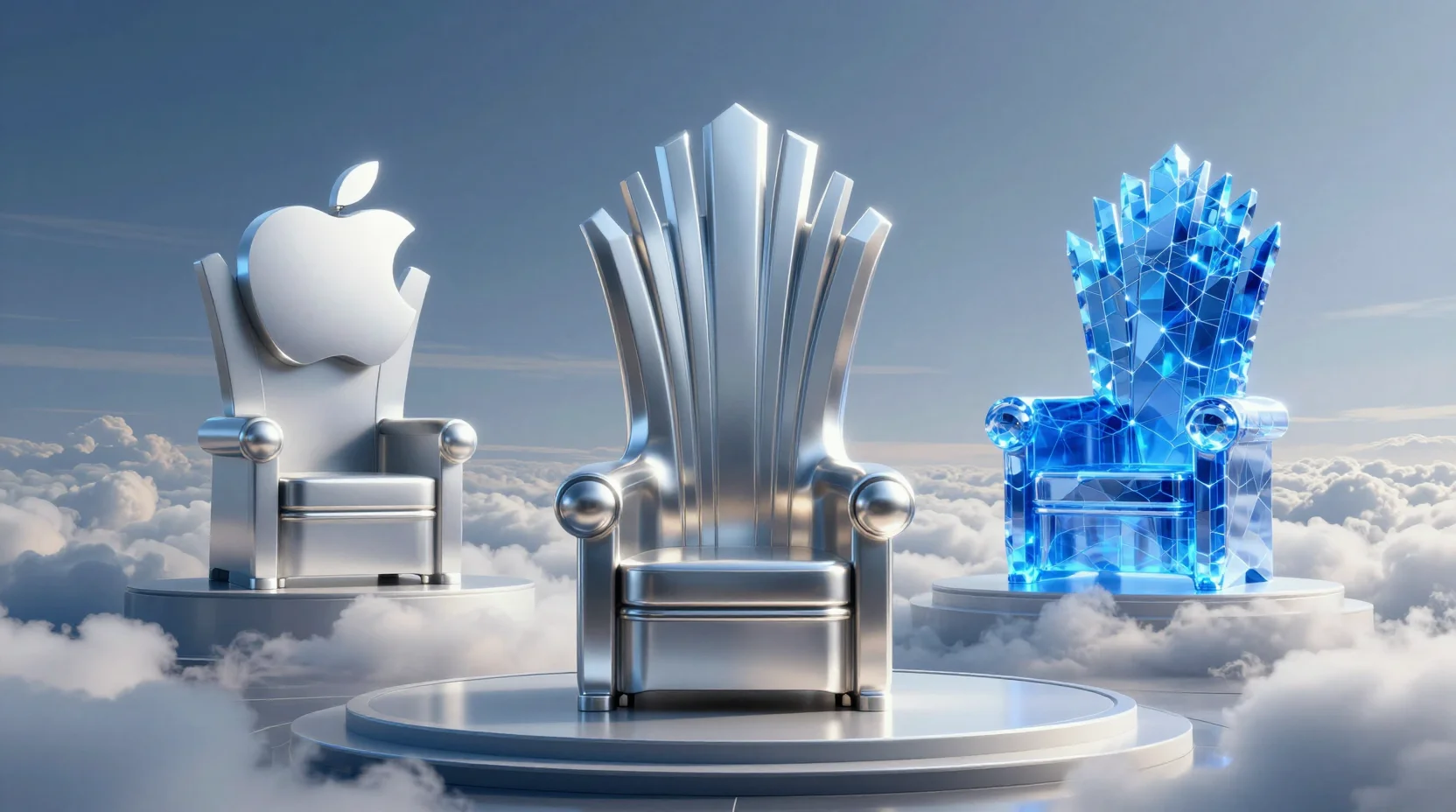
The race for the world's largest company by market capitalization remains intensely competitive among technology giants Apple, Microsoft, and NVIDIA. As of January 2026, these three companies continue to battle for the top spot, with market positions shifting based on quarterly earnings, product launches, and AI infrastructure demand.
Current Market Cap Leaders
The market cap ranking has seen significant volatility over the past year, largely driven by the artificial intelligence boom and subsequent market rotations. Apple has traditionally held the top position, benefiting from its iPhone ecosystem and services revenue. Microsoft has maintained strong positioning through its cloud computing dominance with Azure and enterprise software offerings. NVIDIA emerged as a major contender in 2025, with its stock surging due to unprecedented demand for AI chips and data center infrastructure.
| Company | Primary Business | Recent Performance |
|---|---|---|
| Apple | Consumer electronics, services | Strong iPhone sales in India market |
| Microsoft | Cloud computing, software | Enterprise AI integration across product suite |
| NVIDIA | AI chips, data center GPUs | Record demand for AI training infrastructure |
Key Factors Influencing January 2026 Rankings
Several factors will determine which company claims the top spot by the end of January 2026. Apple continues to expand its presence in emerging markets, with recent reports showing record iPhone shipments in India during 2025. This geographic diversification helps offset saturation in Western markets and provides growth avenues for services revenue.
Microsoft's strategy centers on AI integration across its entire product portfolio, including Office 365, Azure cloud services, and GitHub Copilot. The company's enterprise-focused business model provides more predictable recurring revenue streams compared to consumer hardware cycles. Corporate AI adoption continues accelerating, with Microsoft positioned as a primary provider of AI infrastructure and productivity tools.
NVIDIA's market cap trajectory depends on sustained demand for AI training chips and data center GPUs. The company faces questions about whether the current AI infrastructure boom represents a temporary surge or a long-term structural shift in computing requirements. Major cloud providers continue investing heavily in AI capabilities, but growth rates may normalize as initial buildouts complete.
Market Sentiment and Valuation Metrics
Current market sentiment reflects uncertainty about which company represents the best long-term investment. Apple trades at a premium valuation due to its consistent profitability and shareholder returns through dividends and buybacks. Microsoft commands a higher price-to-earnings ratio reflecting expectations of sustained cloud growth and AI monetization. NVIDIA's valuation assumes continued hypergrowth in AI chip demand, which may face pressure if enterprise AI spending slows or if competition increases in the semiconductor market.
The January 2026 timeframe coincides with quarterly earnings reports from all three companies, which typically trigger significant stock price movements. Any company reporting stronger-than-expected results could claim the top spot, while disappointing guidance could cause rankings to shift rapidly.
Prediction
Direction: Neutral Probability: 45% Horizon: 7 days (January 31, 2026) Answer: Apple
The analysis suggests Apple will maintain its position as the largest company by market cap at the end of January 2026, with 45% confidence. Apple's diversified revenue streams across hardware, services, and geographic markets provide stability compared to competitors more dependent on specific technology cycles. However, the narrow probability range reflects high uncertainty, as Microsoft or NVIDIA could easily claim the top spot depending on earnings results and market sentiment in late January.
The competitive landscape remains fluid, with all three companies trading within a close valuation range that allows for rapid rank changes based on quarterly performance and investor sentiment toward different technology sectors.