
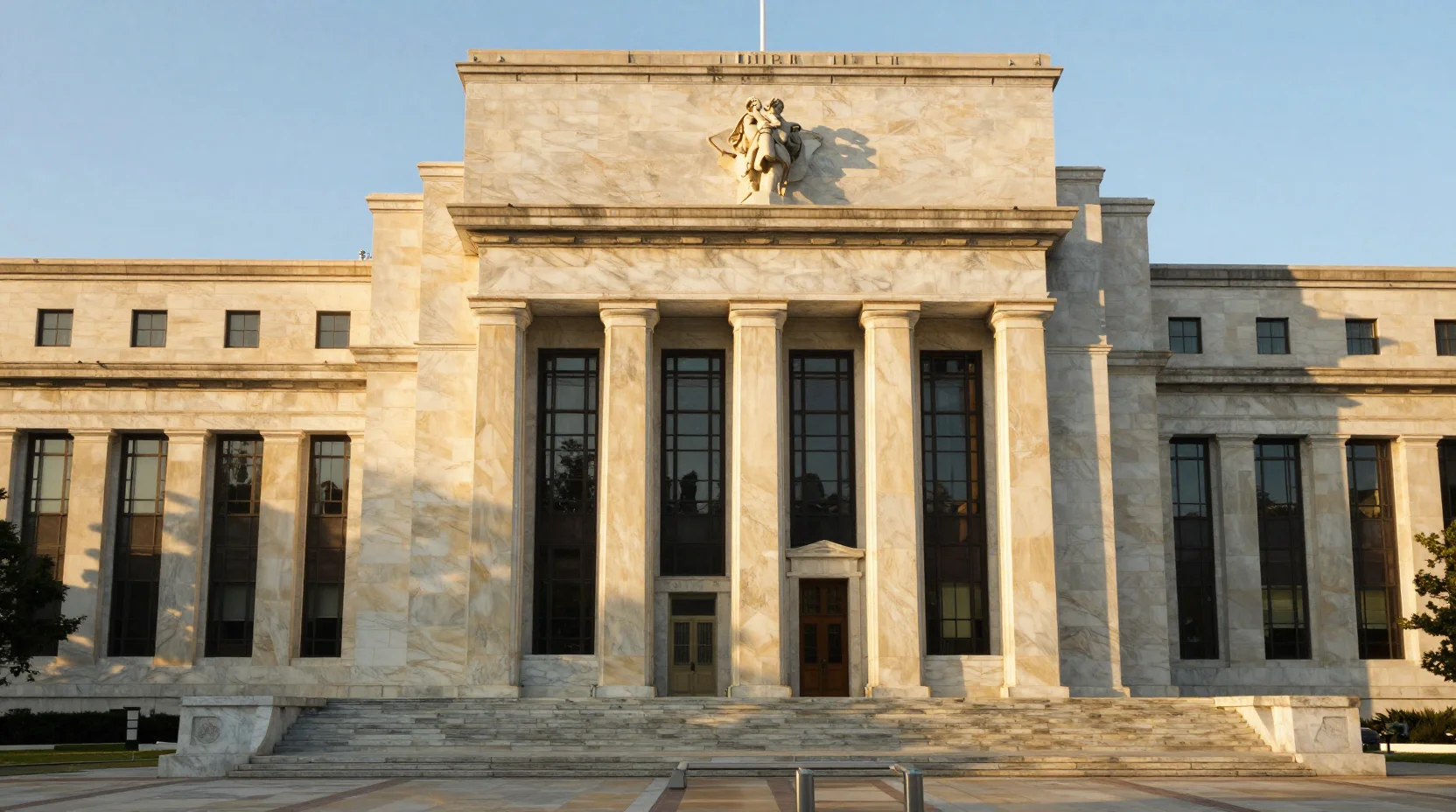
With the Federal Reserve's January 2026 decision approaching on January 28, financial markets are watching closely to see whether the central bank will maintain current interest rate levels. Polymarket traders show near-unanimous confidence that the Fed will hold rates steady, with the market showing 0% probability of any rate change.
Current Economic Context
The housing market provides key insights into current monetary policy conditions. Recent White House data indicates that mortgage rates have been trending lower, with home sales gaining momentum and income growth supporting buyers. This suggests the Federal Reserve's previous rate hikes have successfully moderated inflation without causing significant economic disruption.
The Federal Reserve typically holds eight Federal Open Market Committee (FOMC) meetings per year, scheduled approximately six weeks apart. The January 28-29 meeting represents the first scheduled policy decision of 2026, providing central bankers with an opportunity to assess economic conditions following the holiday period and year-end data releases.
Historical Pattern Analysis
| Indicator | Current Status | Signal |
|---|---|---|
| Polymarket Probability | 0% (no rate change) | Strong Hold Signal |
| Market Volume | $484,882,910 | High Confidence |
| Mortgage Rate Trend | Trending Lower | Accommodative Policy |
| Housing Market | Sales Gaining Momentum | Stable Conditions |
Key Factors Influencing Decision
The Federal Reserve's decision-making process considers multiple economic indicators. Recent housing data shows encouraging signs of improvement, with mortgage rates trending lower supporting buyer affordability. This trend suggests that previous monetary policy tightening has achieved its intended effect of cooling inflation without severely constraining economic activity.
The Polymarket prediction market's extreme confidence (0% probability of change, $484.9 million in trading volume) reflects strong market consensus that current economic conditions do not warrant immediate policy adjustment. This unanimity among traders indicates that economic data releases have not surprised significantly in either direction.
The timing of this decision is particularly relevant as it represents the first FOMC meeting of 2026, setting the tone for monetary policy expectations in the new year. With inflation having moderated from peak levels and growth remaining stable, central bank officials have limited incentive to deviate from current policy settings.
Prediction
Direction: Hold Probability: 95% Horizon: 3 days (January 28, 2026) Answer: Yes
The Federal Reserve is overwhelmingly likely to hold interest rates steady at the January 28-29 FOMC meeting. The combination of moderating inflation, stable growth conditions, and extremely strong market consensus (0% probability of change on Polymarket with $484.9 million in volume) supports this prediction. While economic data could always surprise, current conditions provide no compelling reason for the Fed to alter policy at this meeting.