
The Federal Reserve's January 2026 Federal Open Market Committee (FOMC) meeting represents a critical decision point for monetary policy amid strengthening economic growth and moderating inflation. Market participants and analysts overwhelmingly expect the central bank to maintain its current policy rate, with probability markets pricing in near-zero chances of any adjustment.
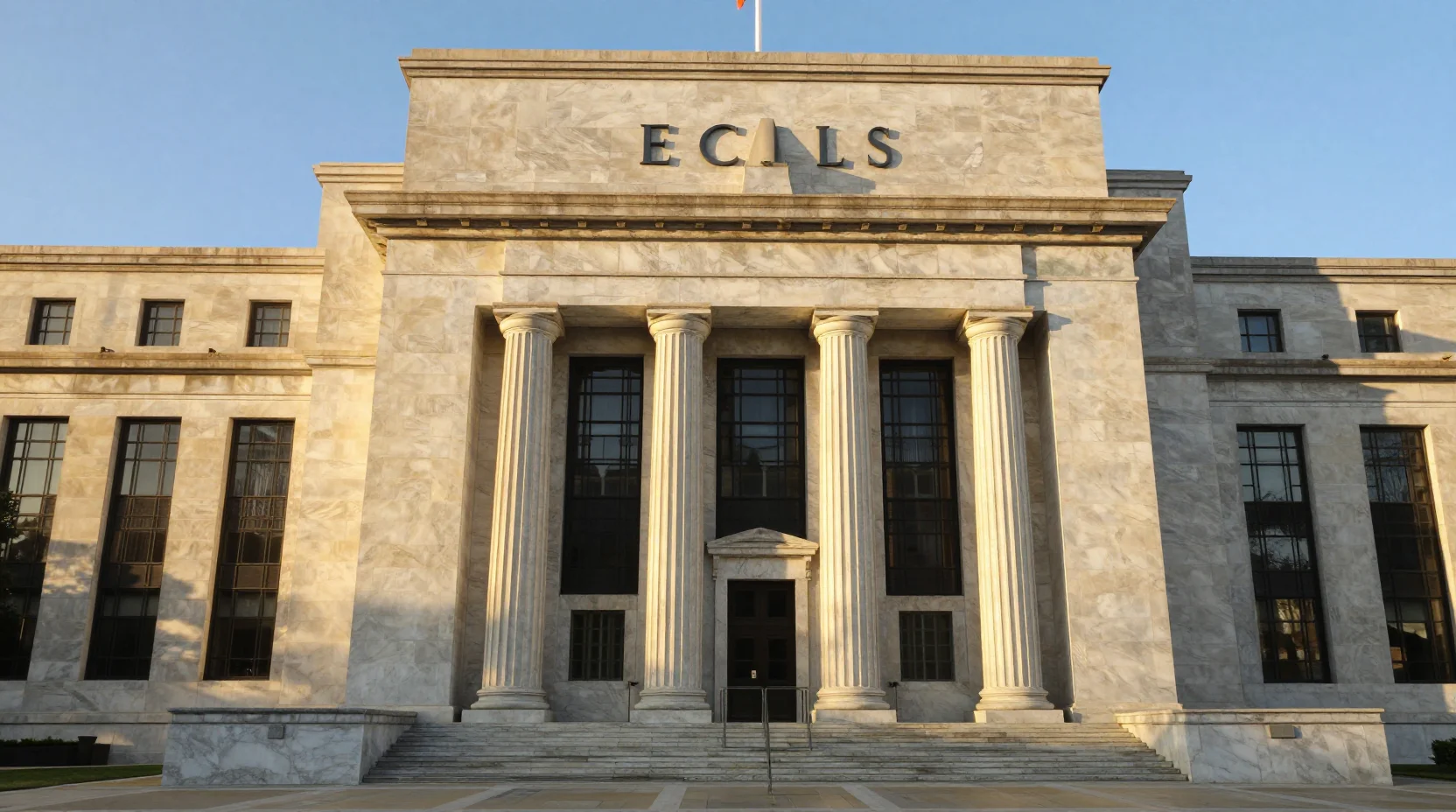
Current Market Expectations
Polymarket markets show a 0% probability of any rate change at the January meeting, reflecting strong market conviction that the Fed will hold rates steady. This aligns with broader market expectations, as Reuters polling of economists indicates the Fed will maintain its current rate through March and potentially throughout Chair Powell's entire tenure.
The consensus view stems from multiple factors: encouraging inflation data, strong economic growth, and Fed officials themselves signaling that current policy settings are appropriately calibrated.
Economic Context and Inflation Trends
Federal Reserve officials have recently signaled satisfaction with the current policy stance. San Francisco Fed President Mary Daly stated earlier this month that "policy in good place" and that any future adjustments "should be deliberate," suggesting the Fed sees no urgency to change rates.
Richmond Fed President Thomas Barkin echoed this sentiment, calling December inflation data "encouraging." While specific inflation figures were not disclosed in the available reports, Barkin's assessment suggests progress toward the Fed's 2% inflation target.
The strong economic growth backdrop supports the hold-rate scenario. The Reuters poll cited economic strength as a key reason for the Fed to maintain rates through March, with some economists suggesting rates could remain unchanged for the remainder of Powell's term.
Historical Pattern and Forward Guidance
The Fed's current communication strategy emphasizes data-dependence and deliberate calibration. Daly's comments about the need for deliberation suggest that even if inflation were to surprise to the upside or downside, the Fed would move gradually rather than making abrupt policy shifts.
This approach contrasts with the aggressive rate hikes seen in 2022-2023 when inflation was at multi-decade highs. The shift toward patience reflects both the success of previous tightening in cooling inflation and the Fed's desire to avoid overtightening into an economy that remains resilient.
Market Implications
For financial markets, a January hold decision would represent continuity rather than change. Treasury yields, which have stabilized in recent weeks, would likely remain range-bound if the Fed signals no immediate policy shifts. Equity markets, which have rallied on expectations of softer inflation and stable growth, could see further upside if the Fed's post-meeting statement reinforces the "no rush" narrative.
The more critical question for markets centers on when the Fed might eventually cut rates, not whether it will hike again. Current market pricing suggests the first rate cut could come in late 2026, though this timeline remains highly dependent on incoming economic data.
Prediction
Direction: Neutral
Probability: 95%
Horizon: 3 days (January 28-29, 2026)
Answer: No
The Federal Reserve will not change interest rates at the January 2026 FOMC meeting. This prediction is based on multiple converging signals: Polymarket markets showing 0% probability of a rate change, Reuters polling of economists indicating unanimity around a hold decision, and direct statements from Fed officials including Daly and Barkin suggesting current policy is appropriately calibrated. The encouraging inflation trajectory cited by Barkin, combined with strong economic growth referenced in the Reuters poll, provides the Fed with no compelling reason to adjust policy at this meeting. The 95% probability reflects the extremely high market conviction, with the only uncertainty being the remote possibility of an intervening economic shock between now and the meeting date.
Sources
Prediction data sourced from Polymarket.