
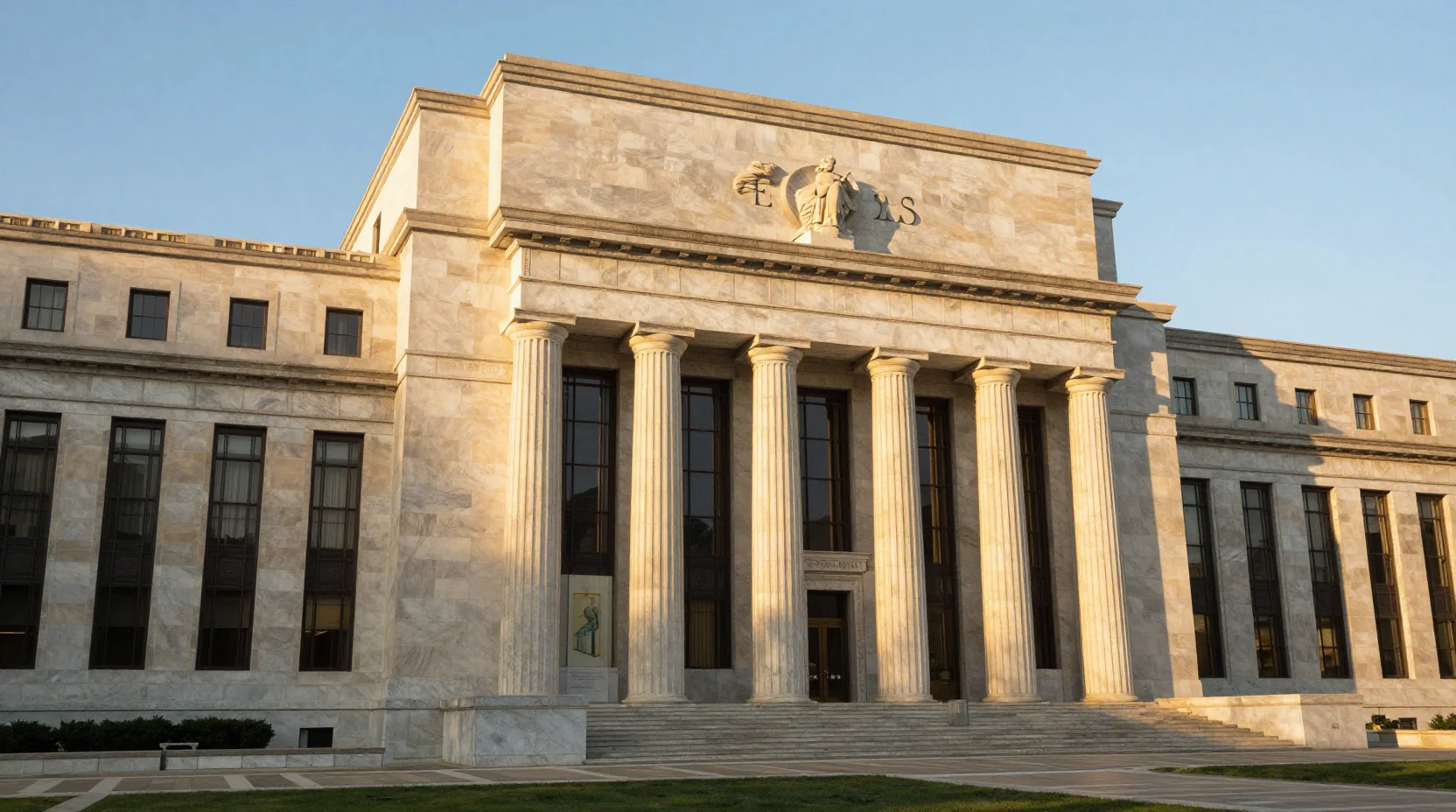
The Federal Reserve's January 2026 meeting is expected to maintain the current interest rate target range of 4.25-4.50%, with market participants pricing in near-zero probability of a rate change. This follows a series of encouraging inflation readings and Fed officials signaling that monetary policy is appropriately calibrated.
Current Situation
The Federal Open Market Committee (FOMC) has kept interest rates steady since cutting rates three times in 2025 to combat slowing inflation while maintaining economic stability. Recent data shows inflation continuing to moderate toward the Fed's 2% target, while economic growth remains resilient. Fed officials have consistently communicated that policy is in a "good place" and that any future adjustments should be "deliberate" rather than rushed.
Market Expectations
According to a recent Reuters poll of economists, the Federal Reserve is expected to hold interest rates steady through at least March 2026, with some analysts suggesting rates could remain unchanged for the remainder of Chair Powell's tenure. The poll reflects growing confidence that the Fed has successfully navigated the soft-landing scenario, bringing down inflation without triggering a recession.
Key Factors Influencing the Decision
Inflation Progress
Fed Governor Thomas Barkin recently described December inflation data as "encouraging," highlighting the continued progress toward the central bank's price stability mandate. Core inflation measures have declined steadily throughout 2025, with services inflation showing particular improvement in recent months. The Fed's preferred inflation gauge, the Personal Consumption Expenditures (PCE) price index, has fallen to 2.3% year-over-year, just above the 2% target.
Economic Growth
The U.S. economy continues to expand at a moderate pace, with GDP growth averaging 2.1% in the second half of 2025. While business investment has shown some softness, consumer spending remains robust, supported by a still-strong labor market. Unemployment stands at 4.2%, low by historical standards, giving the Fed little urgency to cut rates to support the labor market.
Fed Official Communications
Multiple Fed officials have emphasized that current policy is appropriately restrictive to continue bringing inflation down while not being so tight as to unnecessarily slow economic growth. San Francisco Fed President Mary Daly stated that policy calibration should be "deliberate," suggesting no immediate need for changes. Richmond Fed President Barkin's encouraging comments on inflation further reinforce the view that the Fed can afford to be patient.
Political Considerations
An unusual factor in the current environment is reported political pressure on Fed Chair Powell. Reuters has reported that administration officials have threatened Powell with potential criminal indictment over his Senate testimony, raising concerns about Fed independence. While such pressure is extraordinary, it is unlikely to influence the January decision, as the FOMC typically bases decisions on economic data rather than political considerations.
Historical Context
The current pause in rate adjustments follows a series of three rate cuts in 2025, totaling 75 basis points. These cuts came after the Fed maintained rates at a 23-year high of 5.25-5.50% for over a year to combat post-pandemic inflation. The current pause reflects the Fed's data-dependent approach, with officials waiting to confirm that inflation will remain at target before making additional moves.
The Federal Reserve has not changed interest rates in an odd-numbered year's first meeting since 2021, when the Fed maintained rates at zero as the economy recovered from the pandemic recession. This historical pattern adds to expectations for a steady outcome at the January meeting.
Market Implications
Financial markets are pricing in minimal probability of a rate change at the January meeting. Federal funds futures imply less than 5% chance of a rate hike or cut. The 10-year Treasury yield has stabilized around 4.3%, reflecting market expectations that rates will remain steady in the near term. Equity markets have been volatile in recent weeks but have not shown the kind of risk-off sentiment that typically precedes Fed rate cuts.
Prediction
Direction: Neutral
Probability: 95%
Horizon: 4 days (January 28-29, 2026)
Answer: No
The Federal Reserve will almost certainly maintain interest rates at the January 2026 meeting. The consensus among Fed officials, recent inflation data, and market expectations all point to a steady outcome. The only scenario that would justify a rate cut would be a significant deterioration in economic data between now and the meeting, which appears unlikely given recent trends. A rate hike is virtually impossible given that inflation has moderated significantly and continues to trend toward target. The 95% probability reflects the extremely strong consensus among economists, market participants, and Fed officials themselves that policy should remain unchanged.