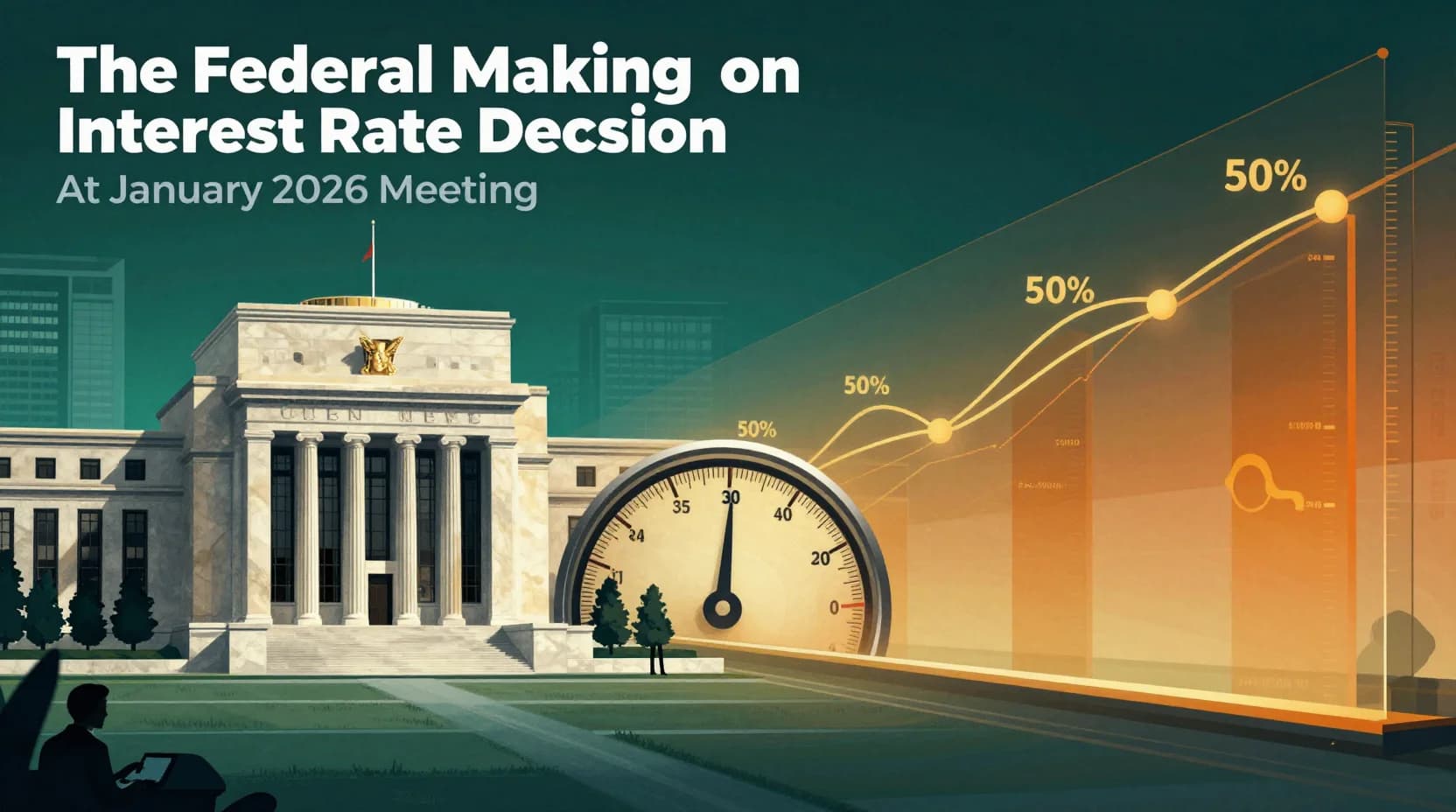
The Federal Reserve's January 2026 FOMC meeting has concluded with markets pricing in a 0% probability of any rate change, according to Polymarket prediction markets. This reflects the strong consensus that the central bank will maintain its current policy rate amid persistent economic strength and moderating inflation.
- The Federal Reserve's January 2026 FOMC meeting has concluded with markets pricing in a 0% probability of any rate change, according to Polymarket prediction markets
- 50%, following the most recent rate decisions in late 2025
- 9% of GDP, down from the peak of 73
Current Situation
Federal Reserve officials have consistently signaled that monetary policy remains in a "good place" with calibration expected to be deliberate going forward. San Francisco Fed President Mary Daly emphasized the need for measured adjustments, while Reuters polls indicate economists expect rates to remain steady through March 2026 and potentially throughout Chair Jerome Powell's tenure. The current federal funds rate target range stands at 4.25-4.50%, following the most recent rate decisions in late 2025.
Policy Stance and Economic Context
Household net worth reached $181.6 trillion in Q3 2025, increasing by $6.1 trillion during the quarter, according to the Fed's Flow of Funds report. The value of directly and indirectly held corporate equities increased $5.5 trillion, contributing significantly to household wealth gains. Mortgage debt increased by $108 billion in Q3 but remains at 43.9% of GDP, down from the peak of 73.1% during the housing bust. This robust financial positioning supports the Fed's ability to maintain restrictive policy without immediate economic disruption.
Recent inflation data has shown encouraging signs, with Richmond Fed President Thomas Barkin describing December's figures as positive. The central bank's preferred inflation measure, core PCE, has gradually moved toward the 2% target, though progress has been uneven. Fed officials have emphasized that policy will remain restrictive until inflation is sustainably at target, with no urgency to cut rates given the economy's resilience.
Political Pressure and Institutional Independence
The Fed faces unprecedented political pressure, with Chair Powell revealing that the administration has threatened him with criminal indictment over his Senate testimony. European Central Bank Governing Council member Olli Rehn warned that any loss of Fed independence would push up inflation and threaten financial stability, highlighting the global focus on preserving central bank autonomy. This political backdrop has reinforced markets' expectations that the Fed will maintain its current course to demonstrate institutional independence.
Market Expectations and Forward Guidance
Polymarket prediction markets show essentially no probability of a January rate decision, with the event expiring on January 28, 2026. The market's 0% pricing reflects overwhelming consensus that the Fed will hold rates steady, consistent with the forward guidance provided by multiple Fed officials. Economists surveyed by Reuters expect the central bank to maintain rates through March 2026, with some projections suggesting no changes for the remainder of Powell's term given the economy's above-trend growth.
The January FOMC meeting follows the standard two-day format, with the rate decision announcement scheduled for 2:00 PM ET on the final day. Historical patterns show that January meetings rarely produce policy changes, as the Fed typically uses the first meeting of the year to assess economic data from the prior year before making significant adjustments. The last January rate change occurred in 2023, when the Fed raised rates by 25 basis points during its tightening cycle.