
The Miami Heat will face the Chicago Bulls on January 29, 2026, in what promises to be an Eastern Conference matchup with playoff implications. As the NBA season progresses beyond the midway point, both teams are jockeying for position in the competitive Eastern Conference standings.
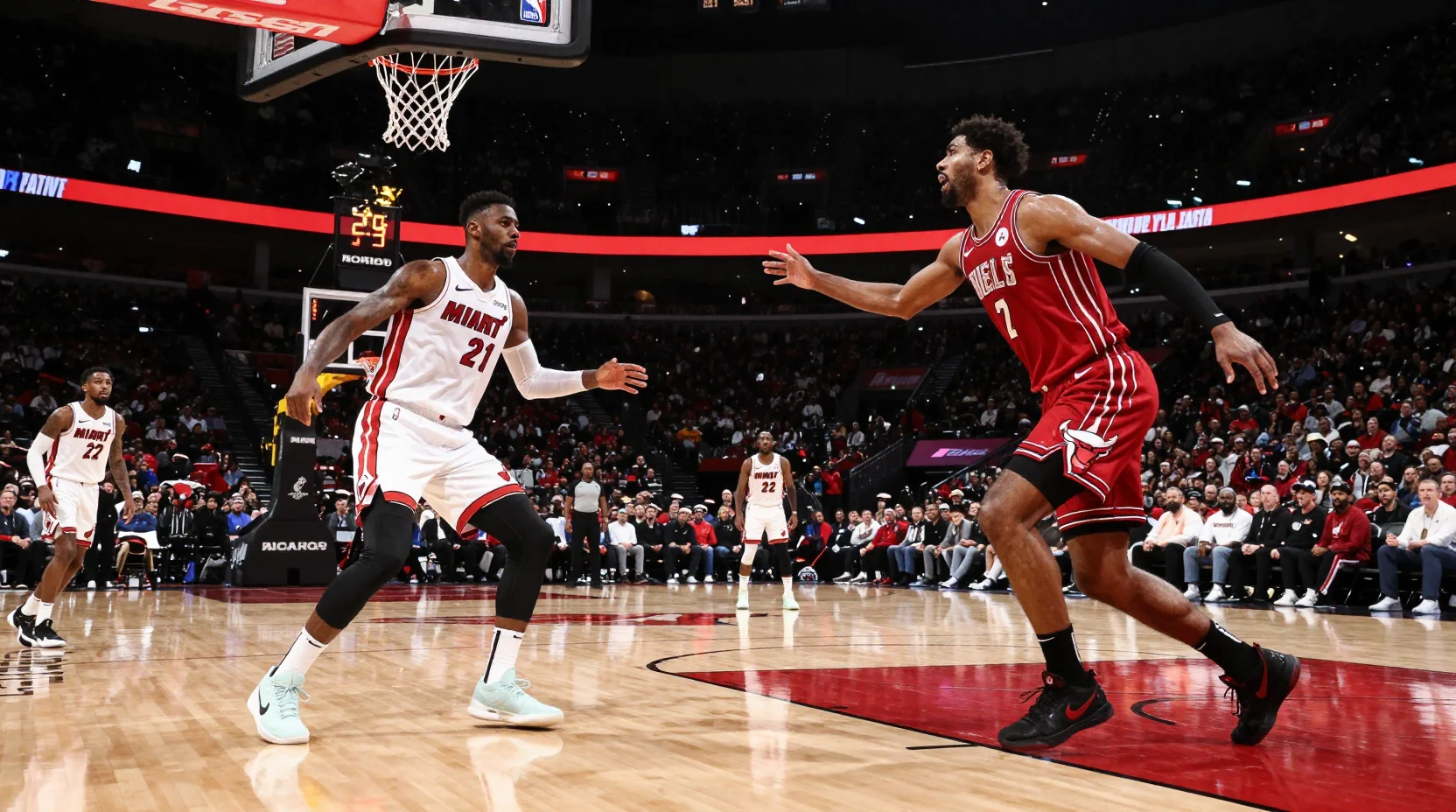
Current Situation
The Heat and Bulls have developed one of the more interesting rivalries in the Eastern Conference over recent years. Miami, known for its defensive identity under coach Erik Spoelstra, typically enters games as a disciplined unit focused on perimeter defense and transition offense. Chicago, meanwhile, has built its roster around athletic guards and forwards capable of scoring in bursts.
The January 29 matchup falls at a critical point in the NBA calendar—just days before the All-Star break and weeks before the trade deadline. Teams often use this stretch to evaluate their rosters and make strategic decisions about buy or sell mode. For both the Heat and Bulls, this game could serve as a measuring stick against a direct conference competitor.
The prediction markets show this game as essentially a toss-up, with both teams given equal 50% probability of victory. This equilibrium suggests oddsmakers and market participants view these teams as evenly matched on paper, likely factoring in home court advantage alongside recent form and roster composition.
Key Factors
Several variables typically influence outcomes in Heat-Bulls matchups. First, Miami's defensive schemes often emphasize limiting perimeter shooting and forcing midrange attempts—a strategy that can be particularly effective against Chicago's guard-heavy offensive approach. Second, the Bulls' success often hinges on their ability to push pace and generate transition opportunities before Miami's defense can set.
Injury availability will play a significant role. Both teams have key contributors who can shift the odds when available or absent. Miami's roster construction around Jimmy Butler and Bam Adebayo creates matchup problems for most teams, while Chicago's depth at the guard position allows for varied offensive approaches.
The scheduling context matters as well. This game represents part of a condensed mid-season schedule where travel, rest days, and back-to-back scenarios can impact performance. Which team enters with better rest and preparation could prove decisive.
Prediction
Direction: Neutral Probability: 50% Horizon: 1 day (January 29, 2026) Answer: Even
The prediction markets indicate this game is too close to call with any confidence. The 50% probability reflects genuine uncertainty about the outcome, suggesting both teams have comparable rosters, form, and situational advantages heading into the matchup. When odds split exactly down the middle, it typically means the available data—recent performance, roster health, home court advantage—fails to clearly favor either side.