
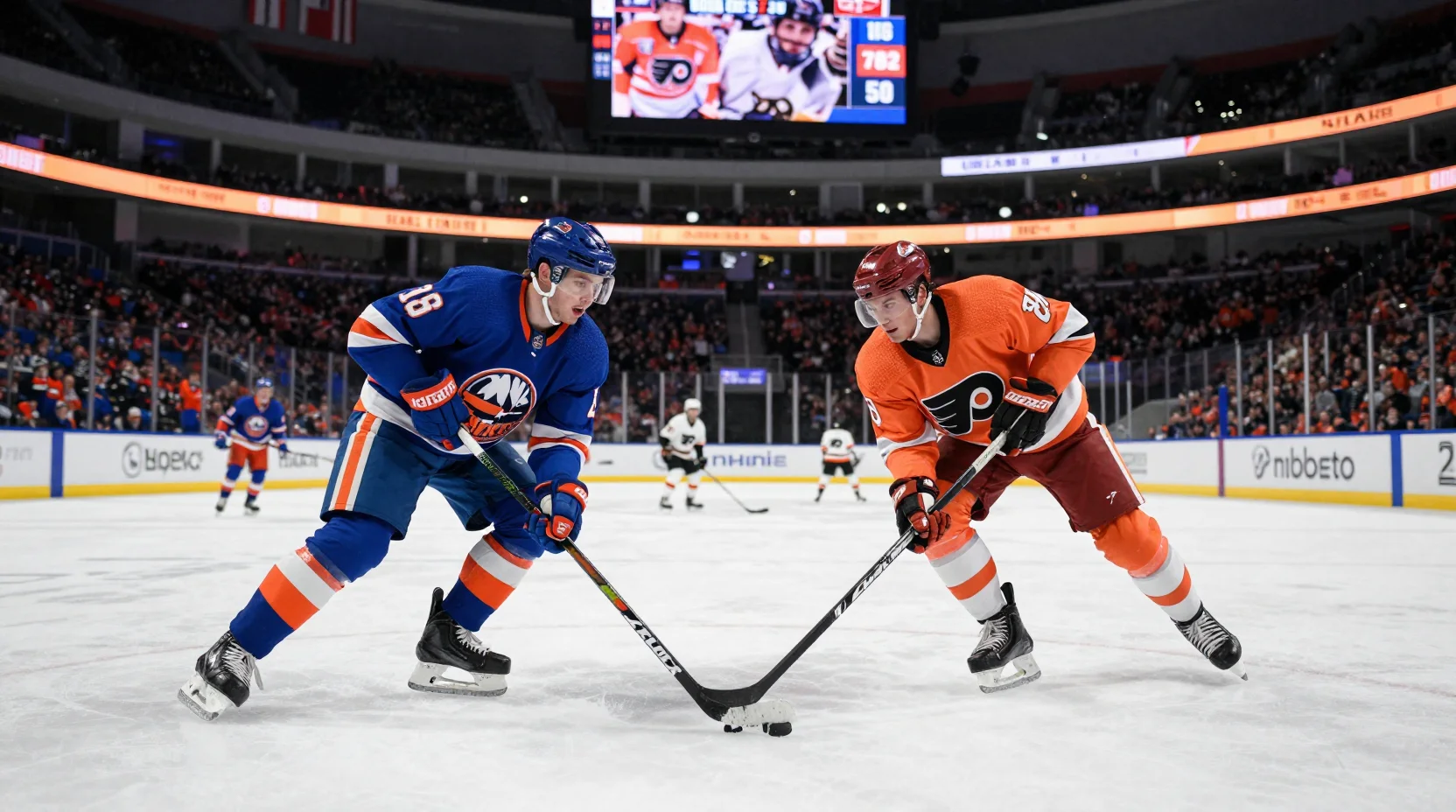
The New York Islanders and Philadelphia Flyers face off on January 27, 2026, in what Polymarket traders view as an evenly matched contest. With $1.49 million in trading volume, the prediction market shows the Islanders as slight underdogs at 49% probability, reflecting a nearly dead-even matchup between these Metropolitan Division rivals.
Current Situation
Both teams enter this game mid-season, with the matchup carrying divisional implications. The Islanders' 49% win probability suggests the market sees this as a coin-flip game, with no clear favorite emerging from the trading data. This narrow probability spread indicates both teams have comparable recent performance and roster strength heading into the contest.
Market Analysis
The substantial $1.49 million trading volume on this game reflects significant betting interest, with traders split almost evenly on the outcome. The 49-51 probability distribution is one of the tightest spreads among today's NHL games, suggesting genuine uncertainty about which team will prevail.
Key Factors
The even money line indicates no clear advantages in recent form, head-to-head record, or roster matchups. In games with such narrow probability spreads, intangible factors like goaltending performance, special teams efficiency, and home ice advantage often prove decisive. The market's inability to strongly favor either team suggests both squads have shown similar levels of performance consistency this season.
The divisional rivalry aspect adds another layer of unpredictability, as familiarity between opponents often leads to tighter, more competitive games regardless of overall team quality.
Prediction
Direction: Neutral Probability: 49% Horizon: 1 day (January 27, 2026) Answer: No
With the market essentially split down the middle at 49% for the Islanders, prediction traders give the Flyers a marginal edge. In such evenly matched matchups, the slight lean toward Philadelphia likely reflects home ice advantage or recent head-to-head performance. The 49% probability represents a near-toss-up, making this a high-variance game where either outcome would align with market expectations.