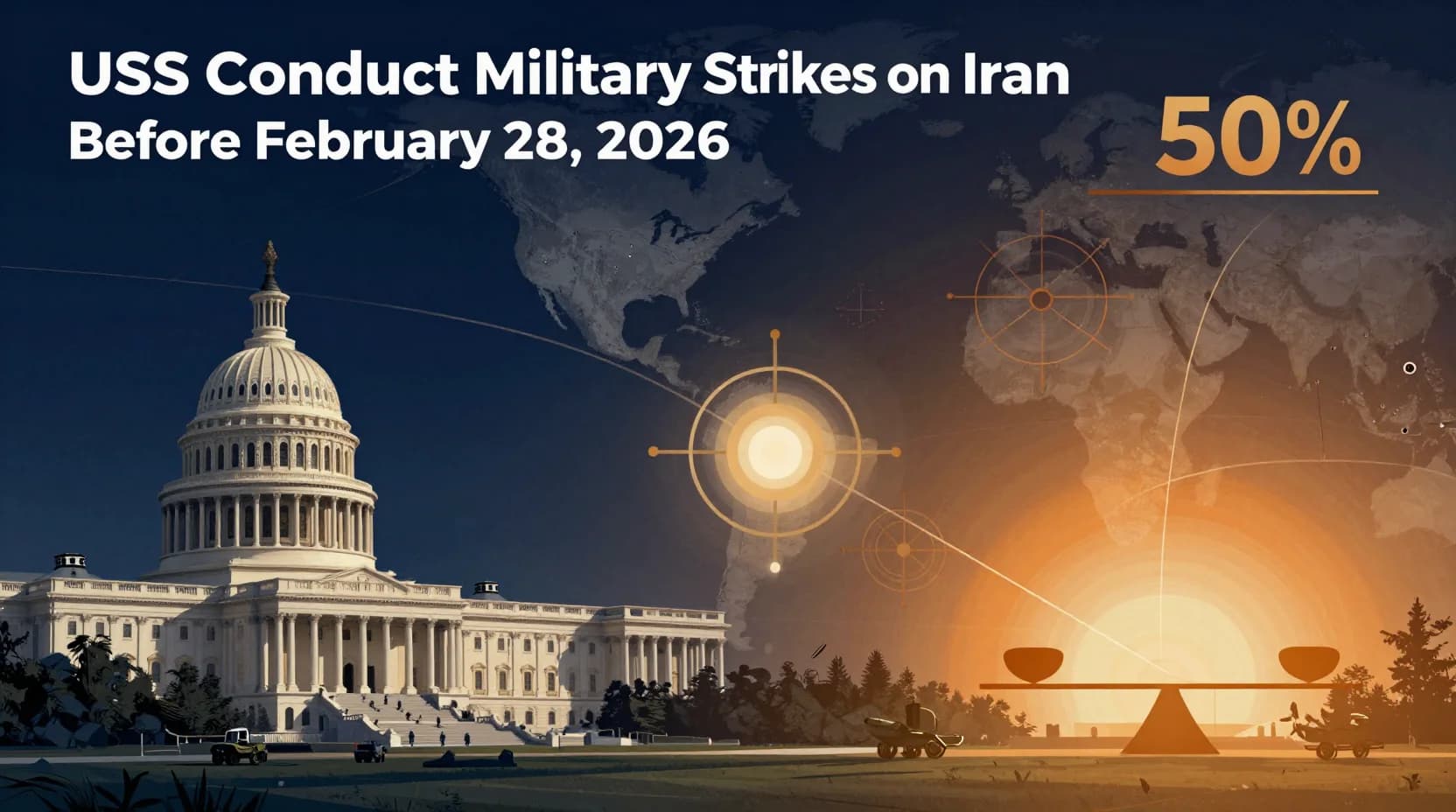
The Pentagon is preparing for weeks-long military operations against Iran while diplomats pack their bags for Oman. That sentence alone captures the absurdity of the current moment -- two branches of the same government racing toward opposite outcomes on the same timeline.
- Military strikes against Iran carry a 50% probability before February 28, 2026 -- a genuine coin flip with global consequences
- Scheduled Oman negotiations represent the strongest diplomatic brake on military action, but the window is razor-thin
- A 13-day decision horizon means every headline between now and month's end could tip the scales
US Military Posture and Preparedness
The US is not just rattling sabers -- it is sharpening them. According to Reuters reporting, the Pentagon is positioning assets for sustained operations that could last weeks, not days. Think of it like the difference between a thunderstorm and a monsoon season: the planning suggests something far more sustained than a one-night barrage.
Recent military drills across the Middle East demonstrate heightened readiness, and the US has imposed additional sanctions as part of its escalating pressure campaign. Sanctions relief remains a key Iranian demand in ongoing nuclear negotiations, per BBC analysis.
Iran's Military Position and Threats
Tehran is not sitting quietly. Iranian officials have explicitly threatened to strike US bases and aircraft carriers across the Middle East if Washington fires first. That is not posturing from a minor player -- Iran commands proxy forces across the region capable of turning multiple theaters hot simultaneously, according to international reports.
The tensions now reach beyond the nuclear file into ballistic missile activities and US action against Iranian-backed Houthis, as regional analysts note. If you are watching this situation, understand that the trigger points have multiplied.
Diplomatic Window: The Counter-Balancing Force
Here is the part that keeps this from being a foregone conclusion. US and Iranian negotiators are scheduled to meet in Oman, and Iran has signaled willingness to compromise on its nuclear program in exchange for sanctions relief, according to Wikipedia's negotiation timeline.
Think of these Oman talks as a pressure release valve on a boiler. The diplomatic pathway does not eliminate the heat -- but it gives both sides an alternative to the explosion. Whether that valve can hold through February 28 is the trillion-dollar question.
Probability Assessment: 50% Likelihood
Direction: Uncertain/Neutral | Probability: 50% | Horizon: 13 days (February 15 to February 28, 2026) Answer: 50/50 split on military action
A coin flip might feel unsatisfying as an analysis, but the data genuinely pulls in equal directions:
| Factor | Pushes Toward Strikes | Pushes Toward Diplomacy |
|---|---|---|
| Military Readiness | Pentagon planning weeks-long ops | Preparations ≠ orders |
| Diplomatic Track | Talks could collapse | Oman channel still active |
| Timeline | 13 days is tight for diplomacy | Too short for full escalation |
| Iran's Posture | Retaliation threats raise stakes | Willingness to negotiate |
Analyst assessments confirm the decision hinges entirely on whether Oman produces enough diplomatic progress to hold off the military track.
Frequently Asked Questions
Is the US preparing to attack Iran in February 2026?
Yes. The Pentagon has confirmed preparations for potentially weeks-long operations if President Trump gives the order. But preparation and execution are separated by a political decision that remains unmade.
What is the probability of US military strikes on Iran before March 2026?
Approximately 50% -- reflecting the genuine standoff between active military positioning and a live diplomatic channel through Oman negotiations.
What would trigger US military action against Iran?
The most likely triggers include Iranian nuclear program advances that cross red lines, ballistic missile tests, or significant attacks by Iranian-backed proxy groups in the Middle East.
US-Iran Military Conflict Prediction: February 28, 2026 Forecast
Direction: Uncertain (50% probability) Answer: Equivocal -- Military action is possible but not predetermined Confidence: Moderate -- Multiple conflicting indicators
The outcome rides on whether Oman negotiations generate enough momentum to keep the military option on the shelf. With the Pentagon preparing for sustained operations and Iran threatening retaliation against US bases, you are watching two trains hurtling toward each other on the same track -- with a single diplomatic switch that could divert one of them.
How to Trade This Prediction
This geopolitical outcome is actively traded on Polymarket, allowing you to back your analysis with real stakes.
Trading Options:
- If you believe strikes will occur: Buy "Yes" shares at 50¢ (potential +100% return if correct)
- If you believe diplomacy will prevail: Buy "No" shares at 50¢ (potential +100% return if correct)
| Outcome | Share Price | Implied Probability | Potential Return |
|---|---|---|---|
| Yes (Strikes occur) | 50¢ | 50% | +100% |
| No (No strikes) | 50¢ | 50% | +100% |
Each share pays $1 if your prediction is correct, $0 if wrong. Sell anytime before resolution. Risk: Only trade what you can afford to lose.
Risk Warning: Prediction markets involve financial risk. Only trade what you can afford to lose. Geopolitical events are inherently unpredictable and past accuracy does not guarantee future results. This is not financial advice.