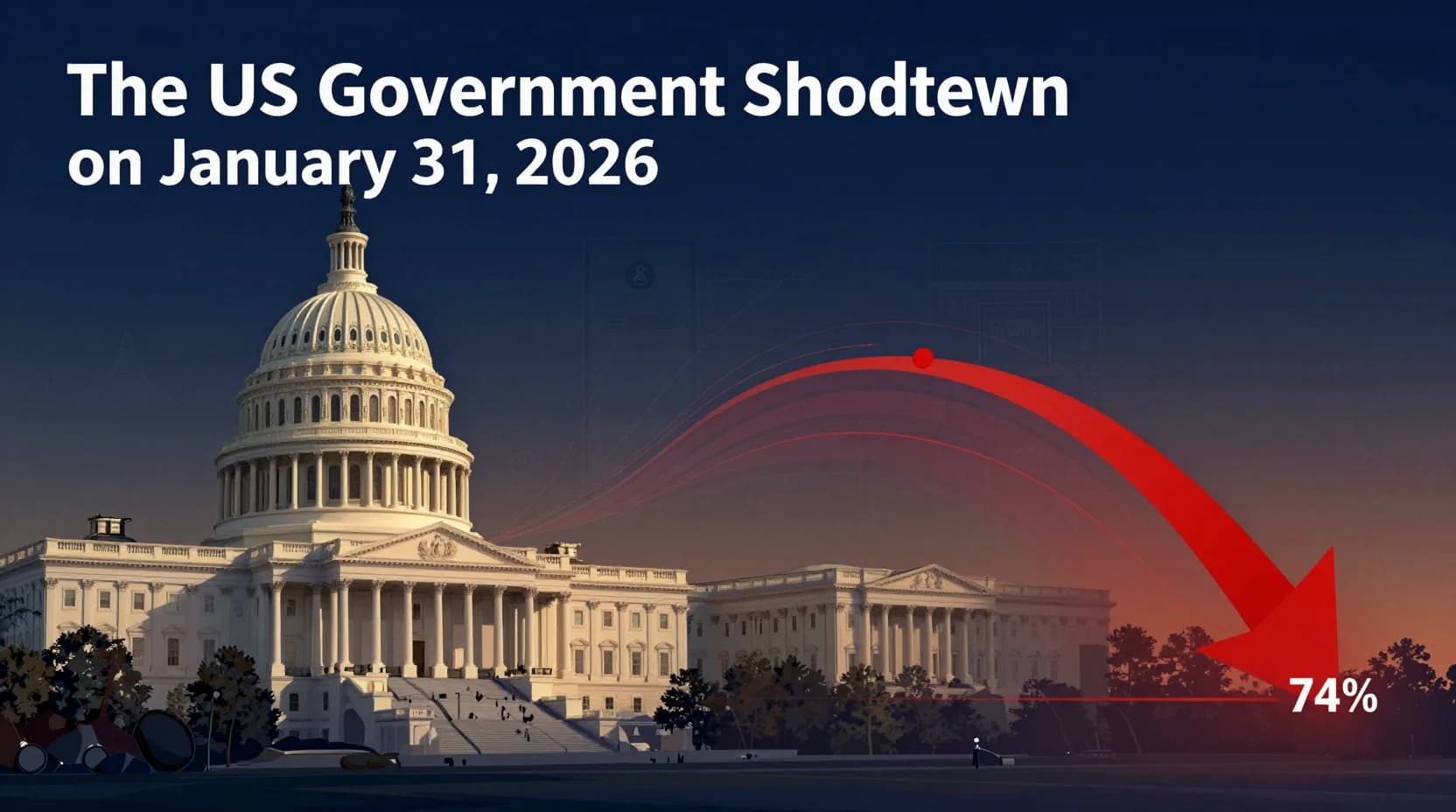
Mark your calendar. January 31, 2026 falls on a Saturday. And if Congress doesn't act before then, the federal government runs out of money.
Sound dramatic? It should. We've been here before.
The Basic Problem
Here's how government funding works. Congress passes spending bills. The president signs them. Agencies get money. Simple enough.
Except when it's not.
A government shutdown happens when those bills don't pass. Non-essential services stop. Federal workers get sent home without pay. Your passport application sits in limbo. National parks close.
The current continuing resolution expires January 31, 2026. Congress needs to either pass new funding legislation or extend what's already in place.
The Political Landscape
Here's where things get interesting. The economy is actually doing pretty well right now.
Inflation? Low. Wages? Rising. The White House points to tariffs, tax cuts, and deregulation as the drivers.
A strong economy creates pressure to keep things running. Politicians don't want to be the ones explaining why they shut down a healthy economy.
What You Lose in a Shutdown
| What Gets Hit | What Happens |
|---|---|
| Federal workers | Hundreds of thousands furloughed without pay |
| Government services | National parks close, passport processing delays, limited IRS operations |
| Economic impact | Government spending drops, contractor payments get delayed |
| Public confidence | Political uncertainty rises, markets get jittery |
What History Shows
Government shutdowns have become more common as partisan fights over spending intensify. But they're also sometimes avoided through last-minute deals.
The pattern? Both sides posture publicly. Negotiations drag on. Then either a deal gets cut at the eleventh hour, or we get a brief shutdown while talks continue.
Three Key Factors
Congress dynamics. If appropriators can agree on spending levels or stomach another short-term extension, shutdown gets avoided. The White House wants economic growth to continue, which helps align interests.
Policy riders. Sometimes everyone agrees on dollar amounts but fights over unrelated provisions attached to the bill. These are the dealbreakers.
The Saturday deadline. January 31, 2026 is a Saturday. That means less time for last-minute negotiations. Either leadership cuts a deal fast, or we're looking at a brief shutdown while talks continue into the weekend.
Prediction
Direction: Bullish (toward shutdown avoidance) Probability: 74% Horizon: 1 day (January 31, 2026) Answer: No
Here's why a shutdown probably won't happen.
Strong economic performance gives both parties incentive to reach a deal. Nobody wants to take credit for derailing growth. The political costs of a shutdown are real, and with positive economic momentum, those costs outweigh any leverage gained from a funding fight.
Most likely outcome? Either a short-term continuing resolution or a last-minute compromise before the deadline. Both sides have too much to lose from a shutdown and enough common ground to avoid one.