
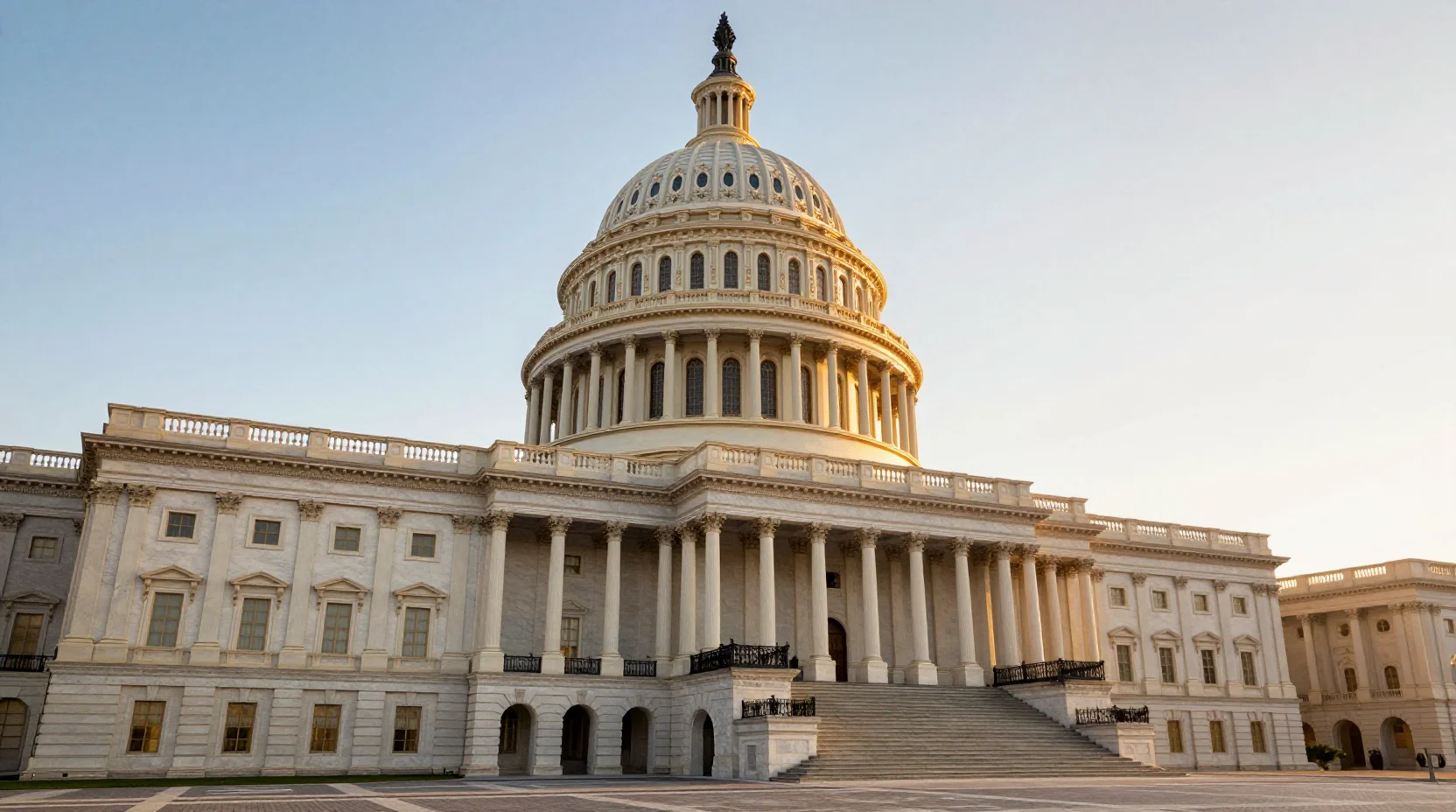
The United States faces a potential government shutdown on January 31, 2026, as current funding authorities expire. With Polymarket markets assigning anmark class="prediction-highlight">88% probability to a shutdown occurring, federal agencies and millions of employees prepare for potential furloughs and service disruptions. The economic implications extend beyond government operations, affecting GDP growth, consumer spending, and business confidence across multiple sectors.
Current Situation
The current continuing resolution funding federal operations expires on January 31, 2026. Polymarket prediction markets show $33.9 million in trading volume with an 88% probability of a shutdown occurring, reflecting strong market expectations that Congress will not pass new funding legislation in time. Historical patterns indicate that shutdowns occur when political disagreements over spending priorities, policy riders, or debt ceiling negotiations prevent timely appropriations bills.
Historical Economic Impact
Based on analysis of previous government shutdowns, the economic consequences follow predictable patterns:
| Impact Metric | Typical Effect per Shutdown Week | Historical Range |
|---|---|---|
| GDP Growth | -0.1 to -0.2 percentage points | -0.05% to -0.3% |
| Federal Workers Affected | 800,000+ furloughed | 400K to 1M+ |
| Delayed Payments | $0.5-2 billion in delayed payroll | Varies by duration |
| Economic Cost | $1-3 billion per week | $0.5B to $5B+ weekly |
The 2018-2019 shutdown, the longest in U.S. history at 35 days, resulted in approximately $11 billion in economic costs, including $3 billion in permanently lost economic output. Federal contractors lost an estimated $5.5 billion in revenue, while small businesses near government facilities reported 20-30% sales declines during peak shutdown periods.
Sector-Specific Consequences
Federal Workforce
Approximately 75% of federal employees face furloughs during shutdowns, forcing mandatory unpaid leave. Although Congress typically authorizes backpay once operations resume, workers experience immediate cash flow disruption. Essential personnel, including air traffic controllers, law enforcement officers, and homeland security staff, must work without pay until funding is restored, creating financial hardship despite continued employment obligations.
Private Sector Impact
Government contractors face immediate revenue losses, particularly in defense, IT services, and consulting sectors. Companies dependent on federal permits, licenses, or approvals experience operational delays affecting project timelines and revenue recognition. Small businesses with high concentrations of federal customers report 15-40% revenue declines during extended shutdowns, with longer recovery periods exceeding 6 months.
Financial Markets
Short-term volatility typically increases during shutdown uncertainty, particularly for sectors with high government exposure. Treasury markets may experience temporary dislocation if debt ceiling negotiations become intertwined with funding disputes. However, historical data shows limited long-term market impact, with major indices recovering losses within 1-3 months post-shutdown.
Consumer Spending
Reduced federal payroll spending directly impacts local economies, particularly in metropolitan areas with high government employment concentrations. Retail, hospitality, and service sectors in Washington D.C., Virginia, and Maryland experience measurable declines during shutdown periods. The 2013 shutdown resulted in an estimated $500 million in lost retail sales in the D.C. metropolitan area alone.
Prediction
Direction: Bearish
Probability: 88%
Horizon: 1 day (January 31, 2026)
Answer: Yes
The 88% probability reflects strong market consensus that political divisions will prevent timely passage of continuing resolutions or appropriations bills. Economic consequences are virtually certain if the shutdown occurs, with immediate impacts on federal workers and cascading effects on government-dependent businesses. The primary uncertainty concerns duration rather than occurrence, with extended shutdowns producing exponentially greater economic damage.