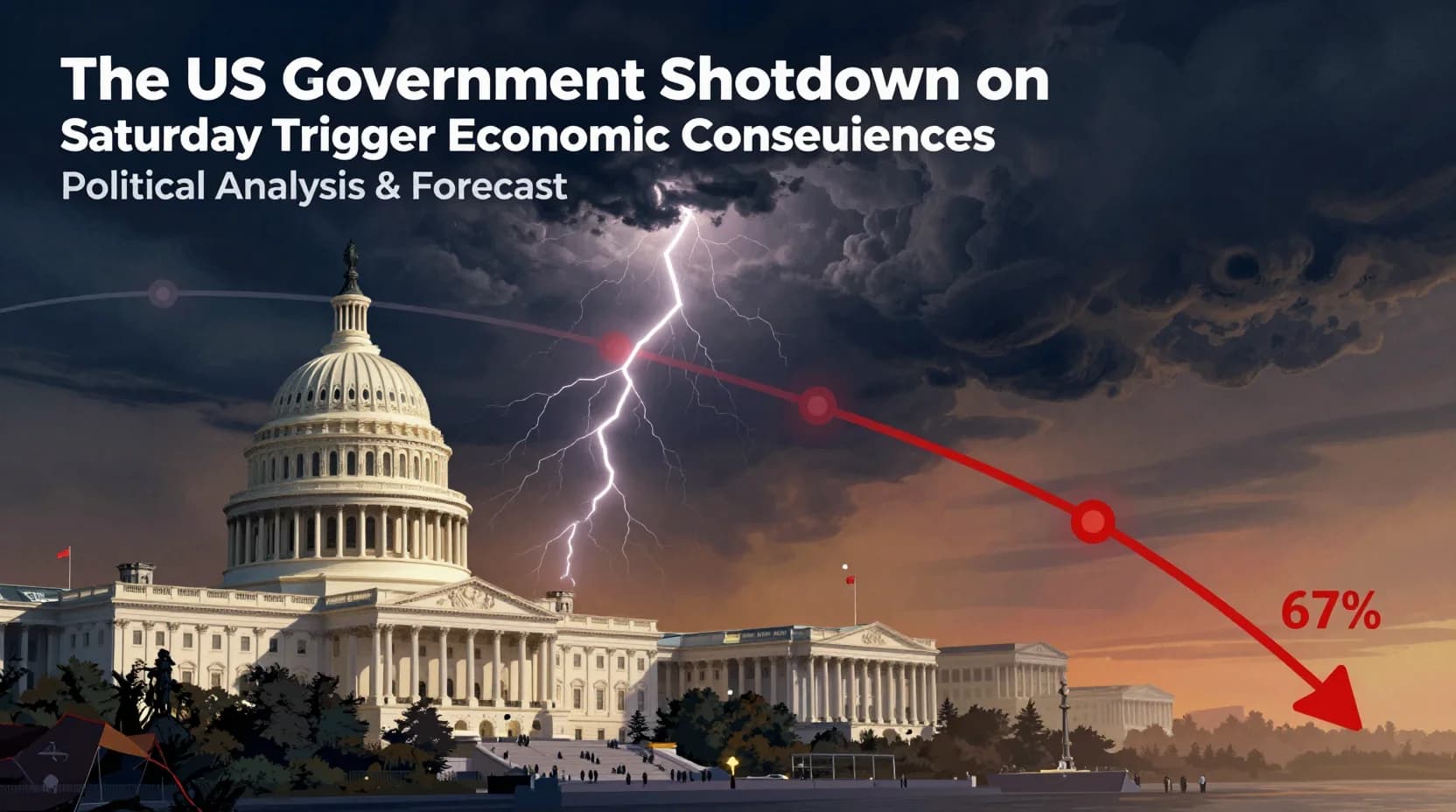
As the January 31 funding deadline approaches, the United States faces the possibility of a government shutdown, with markets and analysts assessing the potential economic fallout. According to Polymarket prediction markets, there is a 67% probability of a shutdown occurring by Saturday, reflecting growing uncertainty about congressional action on appropriations bills.
- According to Polymarket prediction markets, there is a 67% probability of a shutdown occurring by Saturday, reflecting growing uncertainty about congressional action on appropriations bills
- Government Service Disruptions:
- Federal Workforce Impact:
Current Situation
The federal government faces a deadline of January 31, 2026, to pass funding legislation or face a lapse in appropriations. The current Congress has yet to finalize several spending bills needed to keep government operations running. A shutdown would result in furloughs for federal employees and suspension of non-essential government services. President Trump's administration has emphasized economic growth and prosperity in recent policy announcements, but a shutdown could undermine these efforts through disruptions to government services and economic uncertainty.
Historical Economic Impact
| Metric | Historical Data | Pattern |
|---|---|---|
| GDP Impact | -0.1% to -0.2% per shutdown | Direct reduction in economic output |
| Duration | 1 to 35 days (recent history) | Longer shutdowns = greater impact |
| Cost to Economy | $3-11 billion | Depends on duration |
| Federal Workers Affected | 380,000 to 800,000 furloughed | Retroactive pay typically approved |
| Market Volatility | VIX increases 2-5 points | Short-term uncertainty pricing |
Key Factors
Government Service Disruptions: A shutdown would immediately halt or delay numerous government services. Passport processing, tax refunds, Small Business Administration loans, and federal permits would be suspended. The 2018-2019 shutdown delayed approximately $4 billion in tax refunds and caused significant backlogs in passport applications that took months to clear. These delays have cascading effects on businesses and individuals who rely on timely government services.
Federal Workforce Impact: Approximately 380,000 federal employees were furloughed during the 2018-2019 shutdown, with another 420,000 essential employees working without pay until the government reopened. While Congress typically approves retroactive pay, the financial uncertainty for hundreds of thousands of families reduces consumer spending and household economic security. The Washington D.C. metropolitan area, which has a high concentration of federal workers, typically sees measurable declines in retail sales and restaurant revenue during shutdowns.
Business and Contractor Losses: Government contractors lose revenue immediately when agencies cease operations. Small businesses that rely on government contracts or permits face cash flow crises. The 2018-2019 shutdown resulted in an estimated $6 billion in lost contractor revenue, with smaller firms disproportionately affected due to limited cash reserves. Businesses near federal facilities and national parks also experience reduced foot traffic and revenue losses.
Market Uncertainty: Financial markets typically experience increased volatility during shutdowns as investors assess the economic impact and political resolution prospects. The S&P 500 declined approximately 2.5% during the 2018-2019 shutdown, though other factors also contributed to market weakness. However, markets typically recover quickly once a resolution is reached, provided the shutdown does not significantly alter long-term economic policy expectations.