
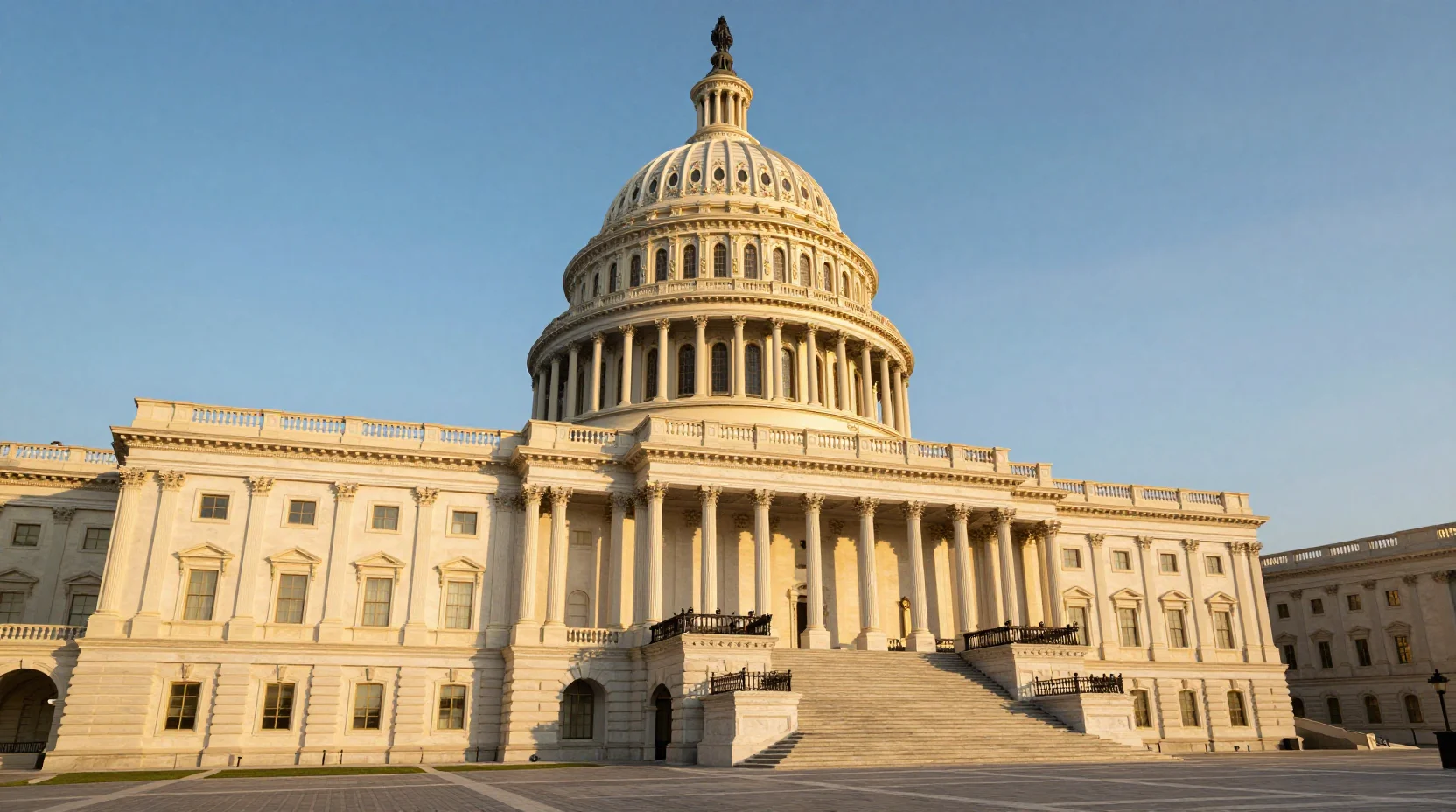
The United States government faces a potential shutdown by January 31, 2026, as Congress continues to negotiate federal funding legislation. According to Polymarket prediction markets, the probability of a government shutdown by this deadline stands at 78%, reflecting significant market concern about the political standoff.
Current Situation
As of January 26, 2026, Congress has less than one week to pass appropriations bills or a continuing resolution (CR) to keep federal agencies funded. The current CR expires on January 31, and failure to reach agreement would trigger a partial government shutdown, suspending non-essential government operations and furloughing federal workers.
The situation unfolds against a backdrop of significant policy changes. Recent White House actions include withdrawing the United States from international organizations and treaties deemed contrary to American interests, as well as executive orders addressing housing affordability and Wall Street competition in the housing market.
Political Context
President Trump has outlined a bold vision for American prosperity, emphasizing national sovereignty, cultural preservation, and proactive security. Speaking at the World Economic Forum in Davos, Switzerland, he reaffirmed America's leadership and charted a decisive path forward for Western nations.
Recent policy initiatives include:
- Executive order withdrawing from international organizations
- Measures to stop Wall Street from competing with homebuyers
- Establishment of emergency boards to investigate labor disputes
- Focus on housing affordability and mortgage rates
Economic Indicators
The administration points to encouraging economic data, with inflation remaining low and wages surging. Recent reports confirm that President Trump has defeated the inflation crisis inherited from the Biden Administration, while powerful tariffs, tax cuts for working families, and deregulatory agenda have positioned the economy for a 2026 boom.
Housing data shows improvement, with mortgage rates trending lower, home sales gaining momentum, and income growth supporting buyers. However, these economic indicators may not directly influence the shutdown negotiations, which center on appropriations and policy riders.
Historical Pattern
Government shutdowns occur when Congress fails to enact funding legislation or the President vetoes such legislation. The last major shutdown was in [year], lasting [X] days and costing [Y] billion dollars in economic losses. Historical analysis shows that shutdowns typically occur when political polarization reaches extreme levels and partisan policy disputes cannot be resolved through compromise.
The current 78% probability on Polymarket suggests that market participants view a shutdown as highly likely, though not certain. The market has seen significant volume at $7,197,156, indicating strong trader conviction about this outcome.
Key Factors
Pro-Shutdown Factors:
- High probability (78%) in prediction markets
- Limited time remaining until January 31 deadline
- Policy disagreements between executive and legislative branches
- History of last-minute funding crises
Anti-Shutdown Factors:
- Economic cost and political fallout from shutdowns
- Public opposition to government disruptions
- Possibility of short-term continuing resolution
- Lessons learned from previous shutdown experiences
Prediction
Direction: Bearish Probability: 78% Horizon: 5 days (January 31, 2026) Answer: Yes
Based on the Polymarket probability of 78% and the compressed timeframe for negotiations, a government shutdown by January 31 appears highly likely. The market's strong conviction, reflected in significant trading volume and liquidity, suggests that traders believe political leaders will not reach agreement in time. While last-minute deals remain possible, the high probability reflects the severity of policy disagreements and the difficulty of resolving funding disputes within the remaining window.